 Spain, 2026 world champions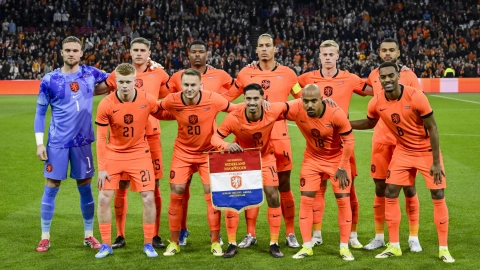
Summary: Morocco eliminated the Netherlands from the 2026 World Cup in the Round of 32, winning the penalty shootout 3-2 after a 1-1 draw. Cody Gakpo gave the Dutch the lead in the 72nd minute, but Issa Diop's 90+1 header forced extra time and penalties. Frenkie de Jong and Virgil van Dijk both missed for the Netherlands. On the same night, Paraguay knocked out Germany. Two European favorites gone in one evening.
The night that changed the tournament
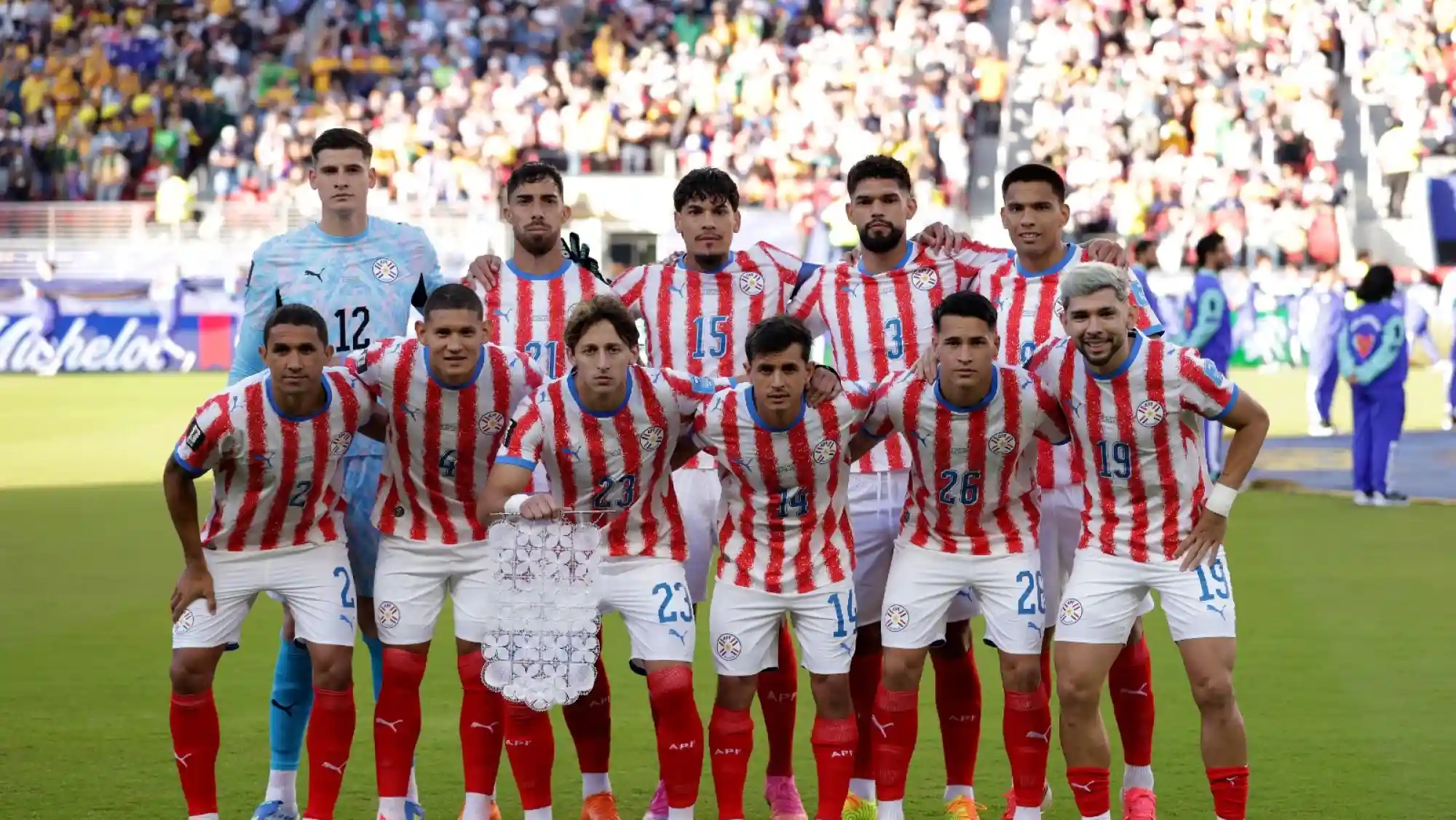
June 29, 2026 will be remembered as the night when two European giants were eliminated in the space of a few hours. While Paraguay were defeating Germany on penalties at Gillette Stadium in Massachusetts, Morocco were doing the same to the Netherlands at the Estadio BBVA in Monterrey. Two sides that had been considered among the favorites to go deep suddenly found themselves packing their bags before the Round of 16.
For Morocco, it was confirmation. The first African team to reach the 2022 World Cup semifinals are showing, again, that major European nations should fear them in knockout football. For the Netherlands, with names like Van Dijk, Gakpo and Frenkie de Jong, it was a painful end to a campaign that promised so much more.
The context makes both results even more striking. Germany had been the tournament's top scorer in the group stage, with 11 goals and a 7-1 win over Curacao among their results. The Netherlands had reached the 2022 World Cup quarterfinals and had a squad full of players operating at the highest level of European club football. Neither side looked like a team about to be eliminated in the first knockout round. That is precisely what made June 29 so significant: it was not a fluke result or a lucky penalty shootout. Both European sides were systematically beaten by opponents who arrived with clearer plans and executed them under maximum pressure.
Match report: BBVA Stadium, Monterrey
Morocco's defensive block holds firm
The match followed a familiar Morocco pattern: a well-organized defensive block, quick transitions on the counter, and collective discipline that made life extremely uncomfortable for their opponents. The Netherlands had the ball but were unable to break through in the first 70 minutes. Morocco's backline, compact and physical, denied any clear chance. Every Dutch attempt to play through the lines was met with organized pressure and bodies in the right positions. Morocco were not simply sitting deep and hoping; they were actively disrupting and redirecting play every time the Netherlands tried to build.
Gakpo breaks the deadlock
In the 72nd minute, the Netherlands finally found the opening they had been pressing for. Cody Gakpo received possession just outside the area, found space, and placed a precise finish to make it 1-0. It looked like enough. Morocco had conceded their defensive structure to give the Netherlands possession, and a single defensive lapse had been punished. A Dutch side with this quality would normally see out a one-goal lead in the final 20 minutes without drama.
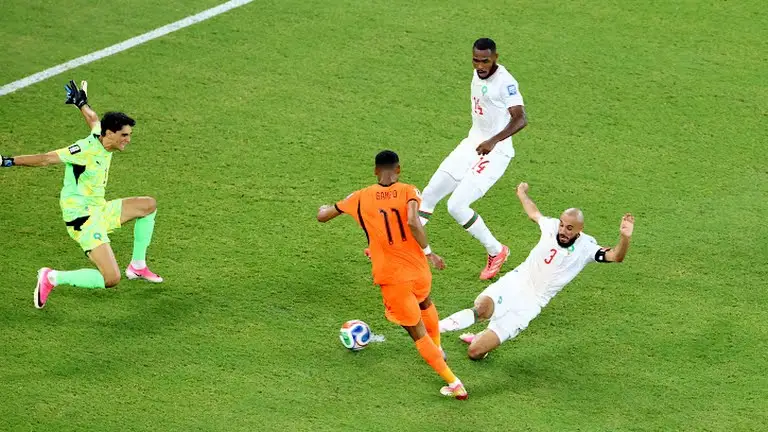
Diop's header in the 90+1 minute
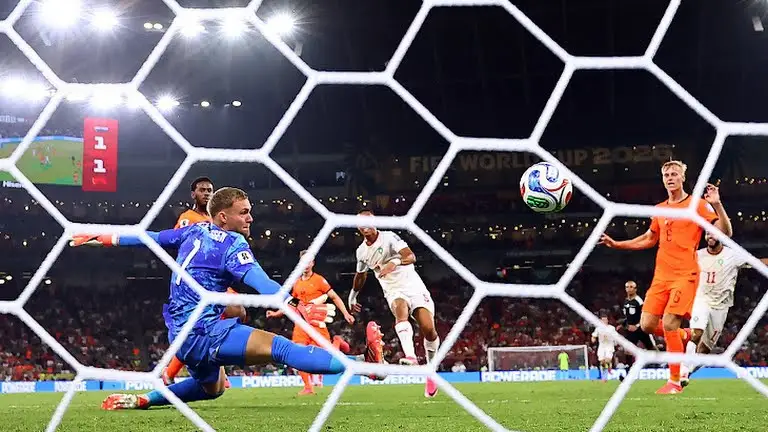
Morocco refused to accept defeat. In the first minute of stoppage time, a cross from the right found Issa Diop rising at the far post. His header beat the Dutch goalkeeper and the stadium erupted. A player who had been booked in the 47th minute, playing under the pressure of that yellow card, produced the defining moment of the match with the game almost over. The 1-1 sent the tie to extra time.
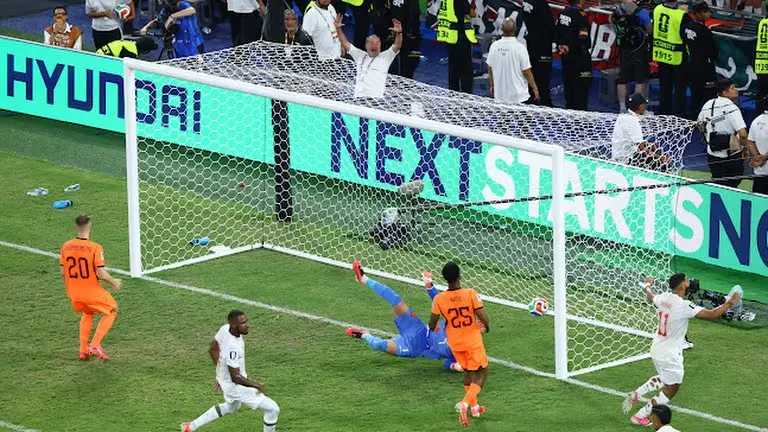
Extra time: nobody could break through
The momentum had shifted entirely to Morocco after Diop's goal. The Netherlands looked shaken, and while they retained enough composure to see out extra time without conceding, they never recaptured the confidence they had shown immediately after Gakpo's goal. The 30 additional minutes ended goalless and the match went to penalties.
The penalty shootout: 3-2 to Morocco
| Order | Netherlands | Result | Morocco | Result |
|---|---|---|---|---|
| 1 | Gakpo | Scored | Aguerd | Scored |
| 2 | De Jong | Missed | Saibari | Scored |
| 3 | Dumfries | Scored | Hakimi | Missed |
| 4 | Van Dijk | Missed | Ounahi | Scored |
Frenkie de Jong, one of the most experienced midfielders in the tournament, missed the second penalty. Virgil van Dijk, the captain and defensive leader who had been outstanding throughout the group stage, then stepped up for the crucial fourth kick and sent it wide. Morocco needed only four takers to complete the shootout, with Hakimi's miss sandwiched between two successful conversions. The 3-2 victory sent Morocco through.
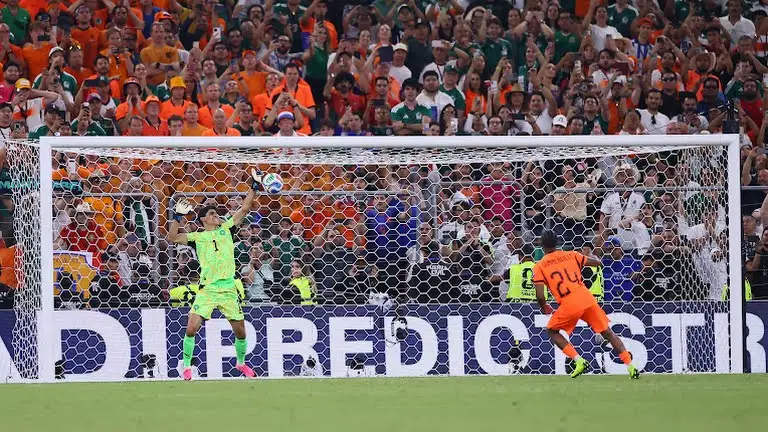
Shootout data: match records, June 29, 2026.
Netherlands at the World Cup: a history of near-misses
The Netherlands are one of the most recognized football nations in the world, famous for a playing style (Total Football) that shaped the modern game in the 1970s. Their World Cup record, however, tells the story of a team that consistently reaches the later rounds without capturing the final prize.
| Year | Result |
|---|---|
| 1974 | Final: lost to West Germany (1-2) |
| 1978 | Final: lost to Argentina (1-3 AET) |
| 2010 | Final: lost to Spain (0-1 AET) |
| 2022 | Quarterfinal: eliminated by Argentina on penalties |
| 2026 | Round of 32: eliminated by Morocco on penalties |
The 2026 exit is the earliest in decades for a Netherlands side. In the expanded 48-team format, going out in the Round of 32 means falling before the traditional starting point of knockout football. For a squad that reached the 2022 quarterfinals and contained multiple Champions League regulars, this is a sharp and unexpected drop. The generation of Van Dijk, Gakpo and De Jong will carry the weight of this result for some time, and the Dutch football federation will need answers about why the team's pattern of underperforming in penalty shootouts continues to recur at the highest level.
Why the Netherlands lost
Missed their key players under pressure
The Netherlands' penalty problem is now recurring. In major tournaments, the ability to convert under maximum pressure separates sides that go deep from sides that go home. De Jong and Van Dijk are two of their finest players; missing in this context will define how this World Cup exit is remembered.
Morocco's strength is collective
Morocco's approach under their coaching staff is built around collective discipline rather than individual brilliance. Their defensive shape frustrated the Netherlands for long stretches. Diop's late goal, from a player who was not a starter, illustrates the depth and belief that runs through the squad. When Morocco needed someone to step up, it was not necessarily their biggest name, it was whoever was in the right place at the right time.
The penalty record is becoming a pattern
The Netherlands have now lost on penalties at the 2022 World Cup (Argentina in the quarterfinals) and in 2026 against Morocco. Two of their last three knockout exits decided from the spot. Converting under maximum pressure is a skill that this generation of Dutch players has struggled to deliver when it matters most, and the tournament is over before they get another chance to put it right.
Morocco's World Cup record in knockout football
Morocco's record in knockout matches at major tournaments since 2022 is extraordinary. In Qatar, they beat Spain on penalties, Portugal 1-0 in the quarterfinals and only lost to France in the semifinals. Now they have eliminated the Netherlands in the Round of 32.
| Tournament | Opponent | Result |
|---|---|---|
| Qatar 2022 | Spain (Round of 16) | Won on penalties |
| Qatar 2022 | Portugal (Quarterfinal) | Won 1-0 |
| Qatar 2022 | France (Semifinal) | Lost 0-2 |
| 2026 | Netherlands (Round of 32) | Won on penalties 3-2 |
That is five wins from six knockout matches across two World Cups. That is not luck. Players like Hakimi (PSG), Saibari (PSV) and Ziyech bring elite club experience to a national team with a tactical clarity that has made them genuinely difficult to break down. Eliminating the Netherlands is not Morocco's ceiling at this tournament.
What this means for the rest of the 2026 World Cup
With the Netherlands and Germany both gone on the same night, the European challenge at this tournament looks considerably thinner. France, England and Belgium are the best of what remains from the continent's confirmed Round of 16 qualifiers. Spain and others may still emerge, but the two teams most expected to represent Europe's best in the later rounds have already left.
Africa, on the other hand, has a genuine contender in Morocco heading into the Round of 16 bracket. A Canadian side that beat South Africa in stoppage time awaits them on July 4 at NRG Stadium in Houston.
South America is also well-positioned, with Brazil and Paraguay both into the Round of 16. The expanded format's first tournament has produced a genuinely open set of knockout contenders. The assumption that the Round of 16 and beyond would be dominated by traditional European heavyweights is already under pressure before the quarterfinals begin.
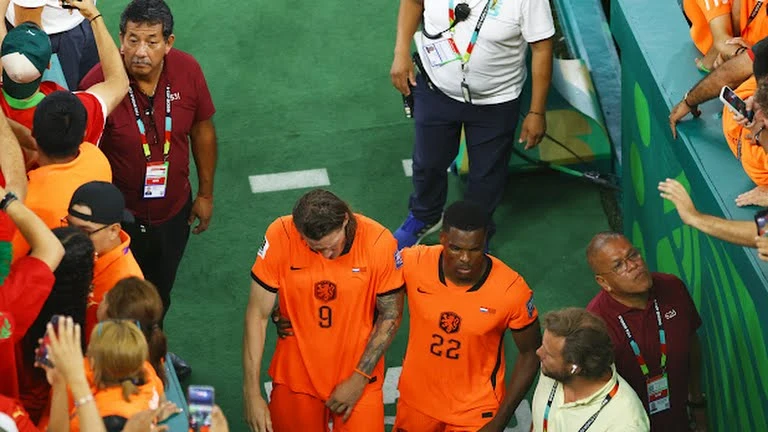
For the Netherlands, the reckoning starts now. A squad built around players in the prime of their careers has run out of chances at this World Cup. Whether this group can recover for future editions or whether this marks the end of a cycle will define how Dutch football remembers 2026. The margin between a Round of 16 place and an early exit was two missed penalties from their two most reliable players.
The hardest part for Dutch football to process is that the exit was preventable. Not just in the shootout (although De Jong and Van Dijk's misses will be replayed and analyzed at length) but in the 72nd minute itself. When the Netherlands went 1-0 up with time to manage, the most common outcome from that position is a Dutch victory. Holding a lead in the final quarter of a knockout match is exactly the kind of situation Van Dijk has handled throughout his career at the highest level. This time it was not enough.
Morocco vs Canada: what to expect
Morocco carry genuine knockout pedigree: at Qatar 2022 they beat Spain and Portugal before losing to France in the semifinals, and Ismael Saibari was the Group C top scorer with three goals. Their defensive collective has not been broken in normal time at this tournament. Canada showed character to score in the 90+2 against South Africa and arrive with co-host momentum.
Morocco go in as slight favorites on paper, but NRG Stadium in Houston will have a loud Canadian following and home-tournament energy is a real factor. The match kicks off July 4 at 13:00 ET. See the full 2026 World Cup bracket for both teams' complete paths.
Tactically, the match sets up as a replay of what the Netherlands experienced: Morocco will look to absorb pressure and strike late, while Canada will try to impose tempo and use the crowd. Canada's co-host status means they are playing in front of home support at every match, and the NRG Stadium crowd in Houston has been among the loudest of the tournament. What the Netherlands failed to turn into a sustained advantage, Canada will try to do differently, but Morocco's defensive system will not make it simple. The match is one of the most anticipated in the Round of 16.
If Morocco advance past Canada, they will face either Spain or Austria in the quarterfinals, potentially another European giant. The path to the semifinals from here is steep but not unprecedented for a side that went the full distance in Qatar 2022. The Atlas Lions have already beaten the odds once in this tournament. Whether they can do it twice over the coming weeks is the question that will define their legacy in 2026.
Canada's perspective is equally compelling. This is the highest-stakes match in Canadian football history: a co-host nation facing one of the genuine dark horses of the tournament in front of a home crowd. The team that reached the 2026 World Cup off the back of their strongest qualifying campaign in decades has shown that late goals and big moments are part of who they are. Against Morocco, both of those qualities will be needed from the very first minute. Canada's capacity to match Morocco's defensive discipline and then find a decisive goal before the Moroccan defensive block becomes even more organized in extra time is the central tactical challenge for the co-hosts. The Round of 16 on July 4 in Houston is one of the most open matches in a bracket that has already produced multiple surprises.
Follow the 2026 World Cup
- 2026 World Cup bracket: live results and updated Round of 16 matchups.
- Full Round of 32 results: all teams through to the last 16.
- Germany also eliminated on the same night: the Paraguay match report.
- Who can still win the 2026 World Cup?
- Full match schedule: Round of 16 fixtures and kick-off times.
Sources: verified match records and sports coverage for the Netherlands vs Morocco R32 match, June 29, 2026. Updated: July 1, 2026.
Frequently asked questions
How did Morocco eliminate the Netherlands at the 2026 World Cup?
The Netherlands and Morocco drew 1-1 after 120 minutes. Gakpo scored for the Dutch in the 72nd minute and Issa Diop equalized in the 90+1. Morocco won the penalty shootout 3-2.
Who scored for the Netherlands and Morocco?
Cody Gakpo scored for the Netherlands in the 72nd minute. Issa Diop equalized for Morocco in the 90+1 to force extra time and penalties.
Who missed penalties for the Netherlands against Morocco?
Frenkie de Jong and Virgil van Dijk both missed their penalties for the Netherlands. Morocco missed just one (Hakimi) and won the shootout 3-2.
Who do Morocco play in the Round of 16 at World Cup 2026?
Morocco face Canada in the Round of 16 on July 4 at 13:00 ET at NRG Stadium in Houston.
Is this the same night Germany were also eliminated?
Yes. On June 29, both Germany and the Netherlands were eliminated in the Round of 32 on penalties. Paraguay beat Germany 4-3 on penalties after a 1-1 draw. Two major European teams went out on the same evening.
Has Morocco done this before at a World Cup?
Yes. Morocco reached the semifinals at the 2022 World Cup in Qatar, eliminating Spain and Portugal along the way. They are the first African team to reach the last four in World Cup history. This Round of 32 win shows they remain one of the world's strongest knockout sides.

Article by
Luis MoralesJournalist and founder of the blog
Luis Morales is a professional journalist who graduated from Universidad del Externado de Colombia and the founder of this World Cup 2026 blog. He has worked for over three years as a copywriter specialized in football and major sporting events. Every article combines journalistic rigor with verification against official FIFA sources to deliver clear, accurate and useful information for fans.
Journalist and content writer · Universidad del Externado de Colombia · 3+ years
See all articles by Luis Morales →Explore more of the 2026 World Cup