 Spain, 2026 world champions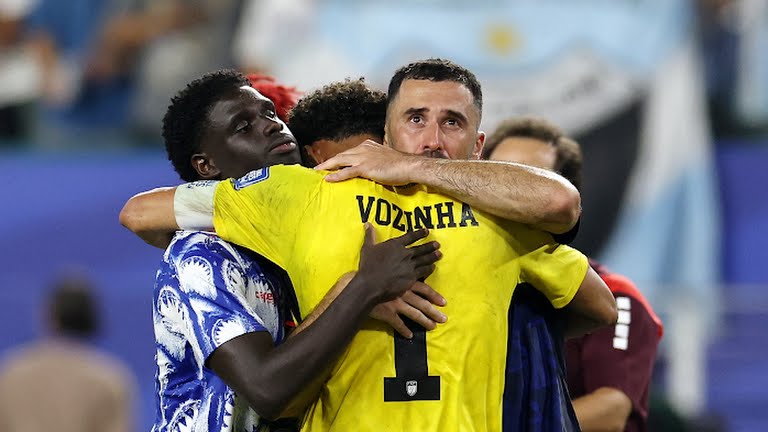
In short: Cape Verde lost 3-2 to Argentina in the Round of 32, but left the 2026 World Cup with a historic performance. The African debutant equalized twice, first through Deroy Duarte and then through Sidny Cabral, forcing the defending champion to suffer until the final minutes of extra time.
A defeat that still felt like a world introduction
Some matches are remembered only for the score. Others change how a team is seen. Cape Verde in 2026 belongs to the second group. It lost 3-2 to Argentina in Miami, but it did so after taking the defending champion to extra time, equalizing twice and turning what looked like a routine knockout tie into a global story of respect.
The match began the way many expected: Argentina went ahead through Lionel Messi in the 29th minute. Then came the answer. Deroy Duarte equalized in the 59th minute, Lisandro Mart?nez restored Argentina?s lead early in extra time, Sidny Cabral made it 2-2, and a Diney Borges own goal settled the match at 3-2. Argentina advanced in the World Cup bracket. Cape Verde left a much bigger mark than the result alone suggests.
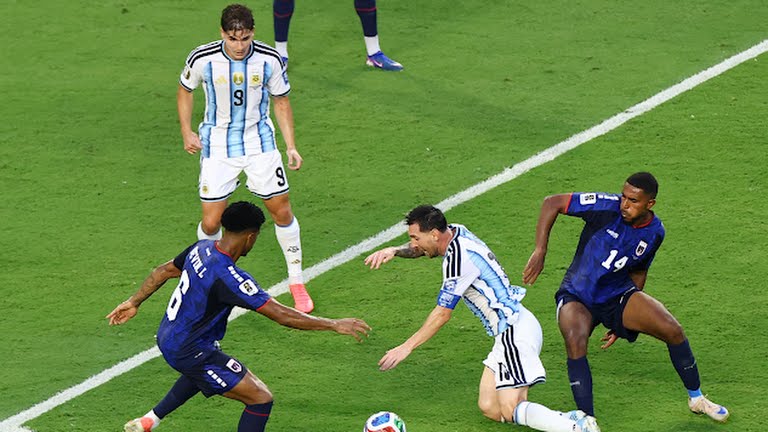
Argentina 3-2 Cape Verde: goals and key moments
| Minute | Team | Player | Score |
|---|---|---|---|
| 29 | Argentina | Lionel Messi | 1-0 |
| 59 | Cape Verde | Deroy Duarte | 1-1 |
| 92 | Argentina | Lisandro Mart?nez | 2-1 |
| 103 | Cape Verde | Sidny Cabral | 2-2 |
| 111 | Argentina | Diney Borges (OG) | 3-2 |
The scale of the performance is not only in the goals. Cape Verde never broke after conceding. It reacted to 1-0, reacted again to 2-1 and finished the match forcing Argentina to defend with urgency. For a World Cup debutant, that competitive response was almost as valuable as a symbolic victory.
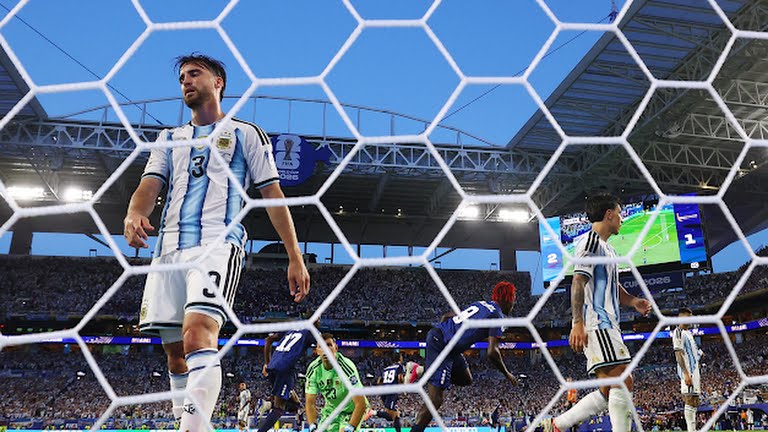
Who are Cape Verde and why does this story matter?
Cape Verde arrived at the 2026 World Cup as one of the most intriguing teams in the field. It is an Atlantic archipelago with a small population compared with football?s major powers, and its national team is built in large part through the diaspora. Its players compete across different European leagues, but the team found a clear identity: organization, courage, clean transitions and a competitive belief that does not depend on the size of the opponent.
Qualifying for a first World Cup was already historic. What Cape Verde did during the tournament elevated that story. In the group stage, it drew 0-0 with Spain, drew 2-2 with Uruguay at Hard Rock Stadium and closed with another 0-0 against Saudi Arabia. Three draws, only two goals conceded and enough solidity to reach the knockout stage of the 2026 World Cup.
A football history built away from the spotlight
Cape Verde?s football history did not begin in 2026, but the World Cup gave it a platform it had never had before. The national team played its first international matches in the late 1970s and spent decades outside the biggest tournaments. Its growth was gradual, built on local clubs, players developed abroad and a diaspora that became central to the team?s modern identity.
The first major leap came in Africa. Cape Verde made its Africa Cup of Nations debut in 2013 and reached the quarterfinals in its first appearance. It again made the last eight in 2023. That path explains why the 2026 World Cup was not a one-off accident, but the continuation of a small nation becoming more serious in structure and results.
The nickname tells part of the story too. The Tubar?es Azuis, the Blue Sharks, represent an island country that turned the sea, migration and belonging into football symbols. Many players were born or raised outside the islands, but chose to represent Cape Verde. That mix of local roots and European diaspora is one of the keys to the modern team.
| Year | Moment | Why it matters |
|---|---|---|
| 1978 | First international matches | The start of a young national team in African football |
| 2013 | Africa Cup of Nations debut | Quarterfinals in its first major continental tournament |
| 2023 | Another AFCON quarterfinal | Proof the project could compete with stronger opponents |
| 2025 | 3-0 over Eswatini in Praia | Historic qualification for World Cup 2026, above Cameroon in the group |
| 2026 | World Cup Round of 32 | First World Cup, knockout stage and extra time against Argentina |
The World Cup qualification was sealed on October 13, 2025, with a 3-0 win over Eswatini in Praia. Goals from Dailon Livramento, Willy Semedo and Stopira sparked a national celebration and closed a qualifying campaign that also kept Cameroon, one of Africa?s historic powers, behind Cape Verde. That context matters: Cape Verde did not appear by accident. It reached the tournament after earning its place against teams with more history and more pressure.
Cape Verde?s road at the 2026 World Cup
| Stage | Match | Result | Detail |
|---|---|---|---|
| Group H | Spain vs Cape Verde | 0-0 | World Cup debut without conceding |
| Group H | Uruguay vs Cape Verde | 2-2 | Goals by Kevin Pina and H?lio Varela |
| Group H | Cape Verde vs Saudi Arabia | 0-0 | Key result to advance |
| Round of 32 | Argentina vs Cape Verde | 3-2 | Extra-time defeat against the defending champion |
That path explains why the defeat to Argentina does not read like an ordinary elimination. Cape Verde did not arrive in Miami as a guest. It arrived after competing with world champions, former champions and teams with far greater history. Its World Cup was built on resistance, but also on ambition when the match demanded more than defending.
Deroy Duarte and Sidny Cabral earned the search traffic
Deroy Duarte had a difficult mission: appear on a night dominated by Messi, Argentina?s shirt and the noise of Miami. His goal in the 59th minute changed the match. It stopped being a controlled knockout tie and became a mental test for the defending champion.
Sidny Cabral completed the picture in extra time. His 2-2 put Cape Verde minutes away from a penalty shootout that would have been one of the tensest scenes of the tournament. Although Argentina found the 3-2 through an own goal, those two Cape Verde goals left a clear narrative: this team did not only resist, it had the personality to strike back.
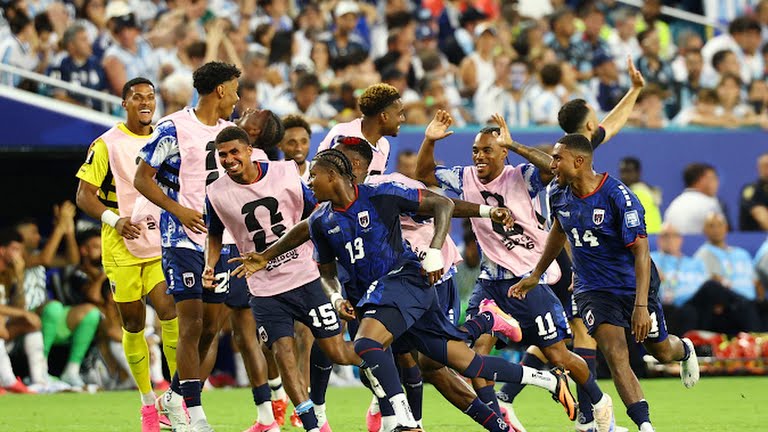
What it means for Africa and World Cup debutants
The 48-team World Cup opened space for more stories, but every team still has to justify its place on the pitch. Cape Verde did that. Its tournament reinforces a trend visible across recent African football: the gap to the major powers shrinks when there is structure, identity and players capable of competing in high-pressure European environments.
For smaller countries, the message is just as strong. Not everyone can win a World Cup, but a nation can build a recognizable team, compete with order and turn a debut into a platform. Cape Verde left the tournament eliminated, but no longer unknown.
What comes next for Cape Verde?
The challenge is to sustain what this World Cup started. Cape Verde must turn the emotion of the debut into a working base: deeper squad options, continuity for the current generation and a competitive calendar that keeps the quality jump alive. If that process holds, the 2026 World Cup may be remembered as the starting point, not a one-time appearance.
The homecoming in Cape Verde: from elimination to national pride
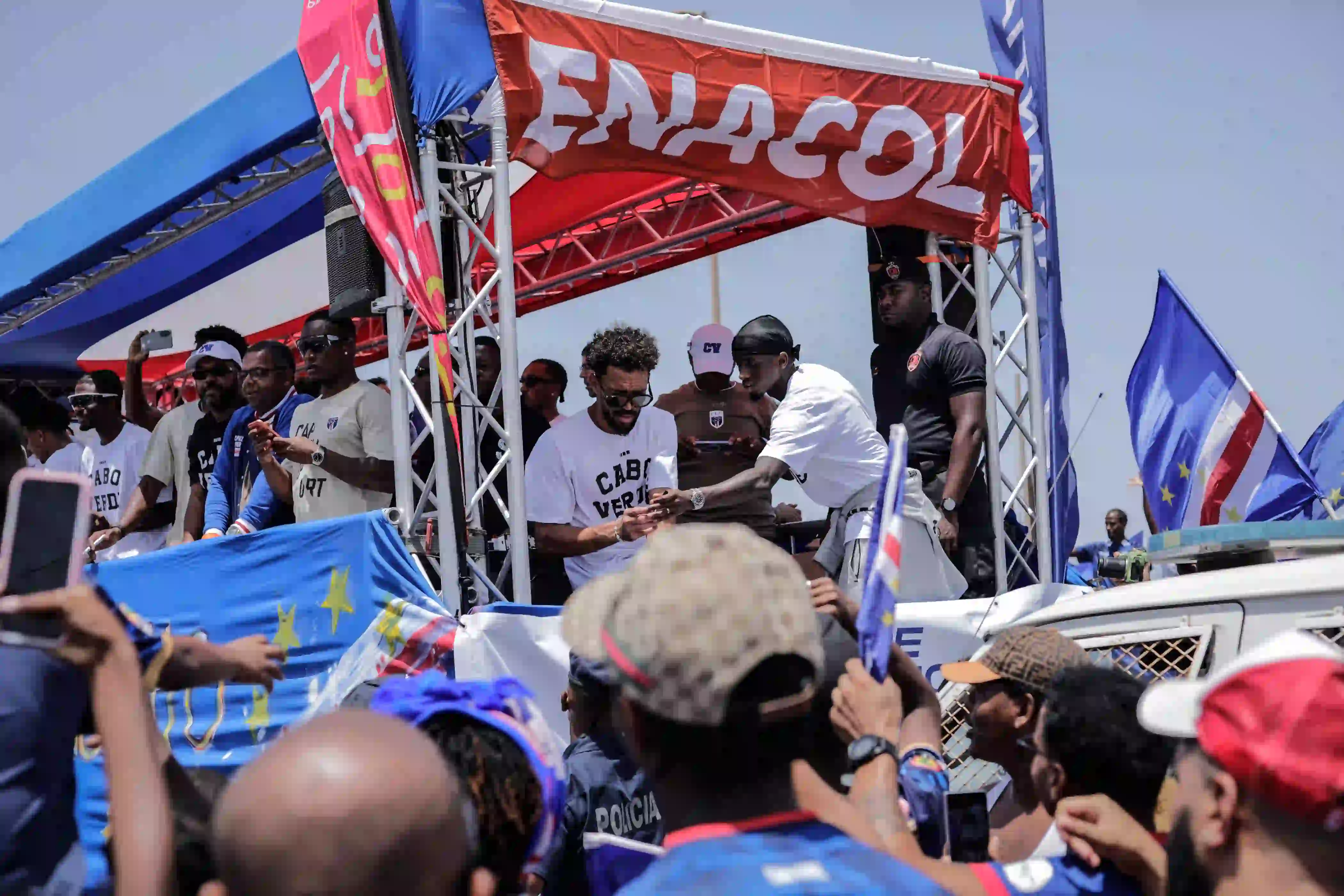
The clearest sign of what this World Cup meant came on the return home. On July 5, 2026, Cape Verde?s Independence Day, the team returned to Praia and was welcomed like a historic delegation. Supporters filled the airport area, flags covered the streets, music and dancing followed the squad, and a caravan celebrated a team that had put the country on the world football map.
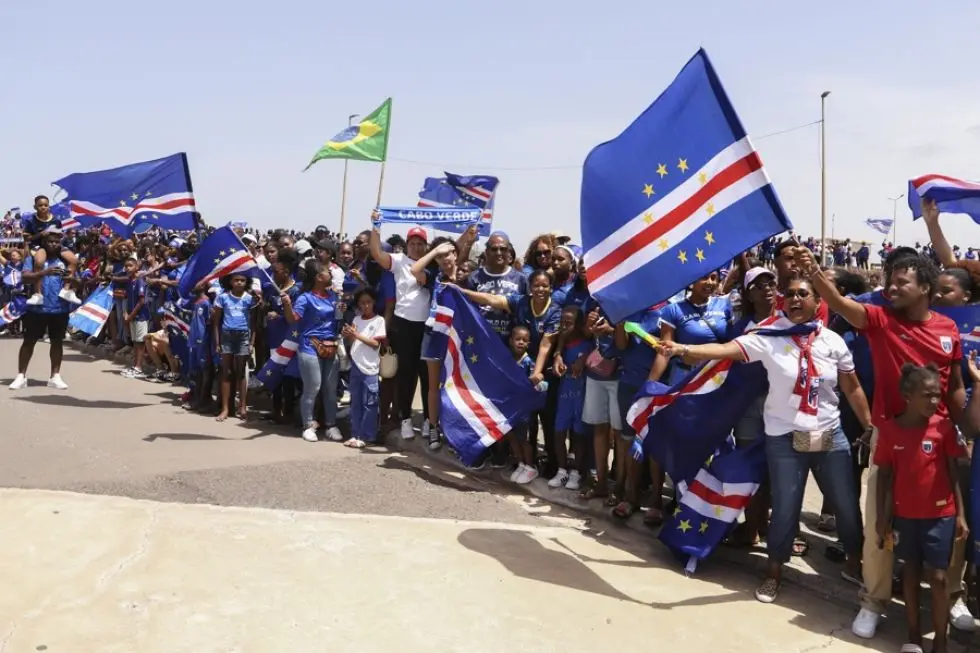
The scene mattered because it changed the meaning of elimination. Cape Verde did not return home with the feeling of a lost opportunity, but with recognition for having played its first World Cup, reached the knockout stage and forced Argentina into extra time. For a nation of around half a million people, that return was a collective statement: the tournament ended, but the story had only begun.
Follow the rest of the tournament with the updated 2026 World Cup bracket, the Round of 32 results and qualified teams and the 2026 World Cup top scorers table.
Sources: 2026 World Cup match records; The Guardian live coverage; The Guardian post-match reaction; The Guardian for Cape Verde?s historic qualification against Eswatini; AP News for the Praia homecoming; FIFA.com for tournament context.
Frequently asked questions
What was the Argentina vs Cape Verde score at the 2026 World Cup?
Argentina beat Cape Verde 3-2 after extra time in the 2026 World Cup Round of 32 at Hard Rock Stadium in Miami.
Who scored for Cape Verde against Argentina?
Cape Verde scored through Deroy Duarte in the 59th minute and Sidny Cabral in extra time. Both goals temporarily brought Cape Verde level against Argentina.
Was 2026 Cape Verde?s first World Cup?
Yes. Cape Verde made its World Cup debut in 2026 and reached the knockout stage after competing in Group H against Spain, Uruguay and Saudi Arabia.
Why was Cape Verde one of the stories of the 2026 World Cup?
Cape Verde stood out because it arrived as a debutant, advanced from a difficult group and took defending champion Argentina to extra time in a dramatic knockout match.
How was Cape Verde welcomed home after the 2026 World Cup?
Cape Verde?s squad received a national welcome in Praia on July 5, 2026, with thousands of supporters, flags and a celebration that coincided with the country?s Independence Day.
What is Cape Verde?s football history?
Cape Verde played its first international matches in 1978, grew through strong Africa Cup of Nations campaigns and reached its first World Cup in 2026 after winning its qualifying group.
Article by
Luis MoralesJournalist and founder of the blog
Luis Morales is a professional journalist who graduated from Universidad del Externado de Colombia and the founder of this World Cup 2026 blog. He has worked for over three years as a copywriter specialized in football and major sporting events. Every article combines journalistic rigor with verification against official FIFA sources to deliver clear, accurate and useful information for fans.
Journalist and content writer · Universidad del Externado de Colombia · 3+ years
See all articles by Luis Morales →Explore more of the 2026 World Cup