 Spain, 2026 world champions
Beyond the trophy the champion nation lifts, FIFA hands out a set of individual awards recognizing the standout players of every World Cup. The most coveted is the Golden Ball for the tournament's best player, but FIFA also awards the Golden Glove to the best goalkeeper and the Best Young Player award. This guide explains what each one is, how it's decided, and who the leading candidates are with the World Cup 2026 now in the Round of 16.
Quick summary: the Golden Ball (best player) is voted on by accredited journalists from a FIFA shortlist; the Golden Glove (best goalkeeper) is decided directly by FIFA's technical panel; and the Best Young Player award requires being 21 or younger at the start of the tournament year. All three are separate from the Golden Boot, which rewards only the top scorer.
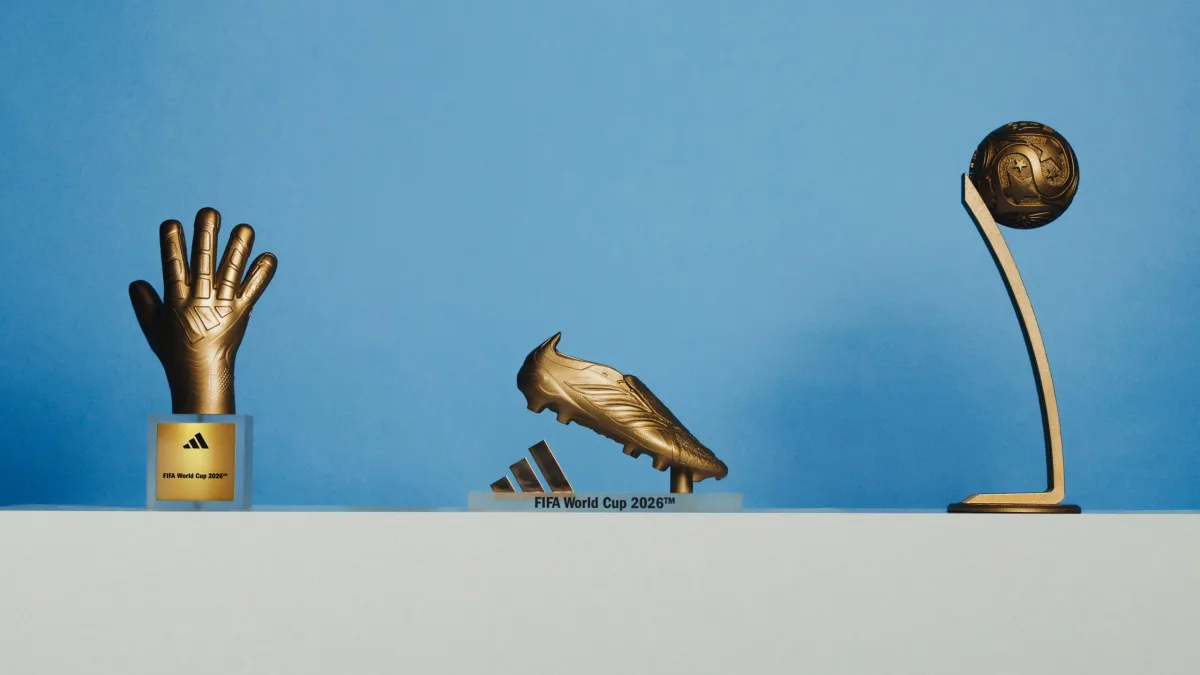
voted on by accredited media
decided by FIFA's technical panel
21 or younger
Golden Ball: the award for the tournament's best player
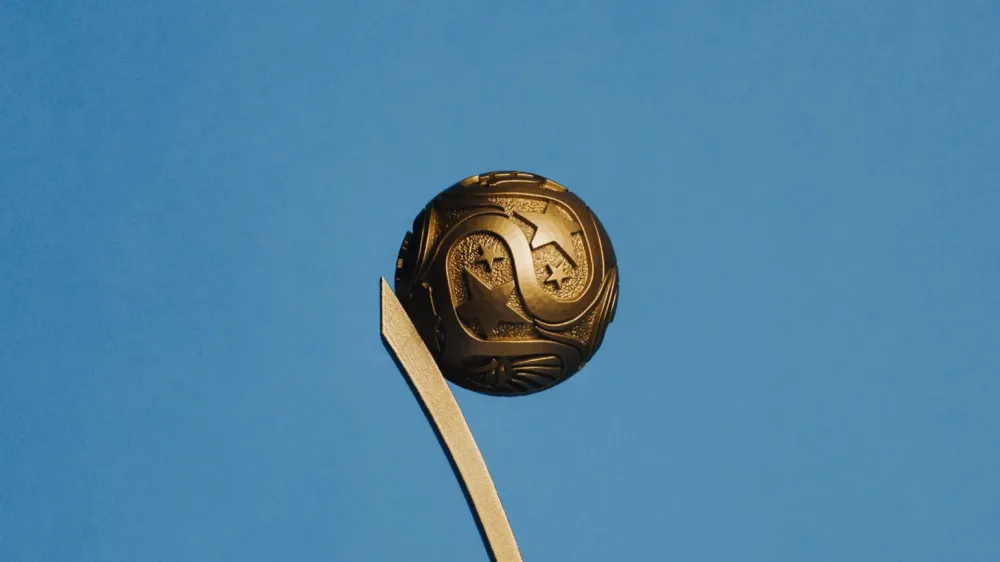
The Golden Ball has been awarded since the 1982 World Cup in Spain, originally sponsored by Adidas and France Football magazine. Its selection process differs from other football individual awards: a FIFA technical committee draws up a shortlist of candidates during the tournament, and accredited journalists at every match vote for the winner. The runners-up receive the Silver Ball and the Bronze Ball.
| Edition | Golden Ball winner | Country |
|---|---|---|
| 2022 (Qatar) | Lionel Messi | Argentina |
| 2018 (Russia) | Luka Modric | Croatia |
| 2014 (Brazil) | Lionel Messi | Argentina |
| 2010 (South Africa) | Diego Forlan | Uruguay |
| 2006 (Germany) | Zinedine Zidane | France |
| 2002 (Korea/Japan) | Oliver Kahn | Germany |
| 1998 (France) | Ronaldo Nazario | Brazil |
| 1994 (USA) | Romario | Brazil |
| 1990 (Italy) | Salvatore Schillaci | Italy |
| 1986 (Mexico) | Diego Maradona | Argentina |
| 1982 (Spain) | Paolo Rossi | Italy |
An interesting quirk of the award's history: you do not need to win the title to take it home. Diego Forlan won it in 2010 even though Uruguay were eliminated in the semifinals, and Zidane won it in 2006 despite being sent off in the final against Italy. The award recognizes individual level across the whole tournament, not just the team's final result. There is an even stranger case: in 2002, Oliver Kahn became the only goalkeeper in history to win the Golden Ball, even though Germany lost the final to Brazil. No other goalkeeper has done it before or since.
The award has also produced memorable debates. At Brazil 2014, James Rodriguez was the tournament's top scorer with 6 goals (the Golden Boot) and one of the most talked-about figures of the whole World Cup, yet the Golden Ball went to Messi even though Argentina lost the final; many analysts and fans felt the award could have gone to the Colombian or to Arjen Robben instead. It remains the most cited example of the Golden Ball not always matching public sentiment.
The voting process has more detail to it than it seems. FIFA's Technical Study Group (currently led by Arsene Wenger, and made up of former players, former coaches and technical directors) watches every match of the tournament in person and only draws up the shortlist of candidates after the semifinals, once it is clearer who has actually made the difference. Accredited journalists then vote after the final, picking their top three players in order: the player ranked first on each ballot earns more points than the second, and the second more than the third. That weighted total decides not just the Golden Ball winner, but also the Silver Ball and Bronze Ball.
Golden Glove: best goalkeeper, no media vote
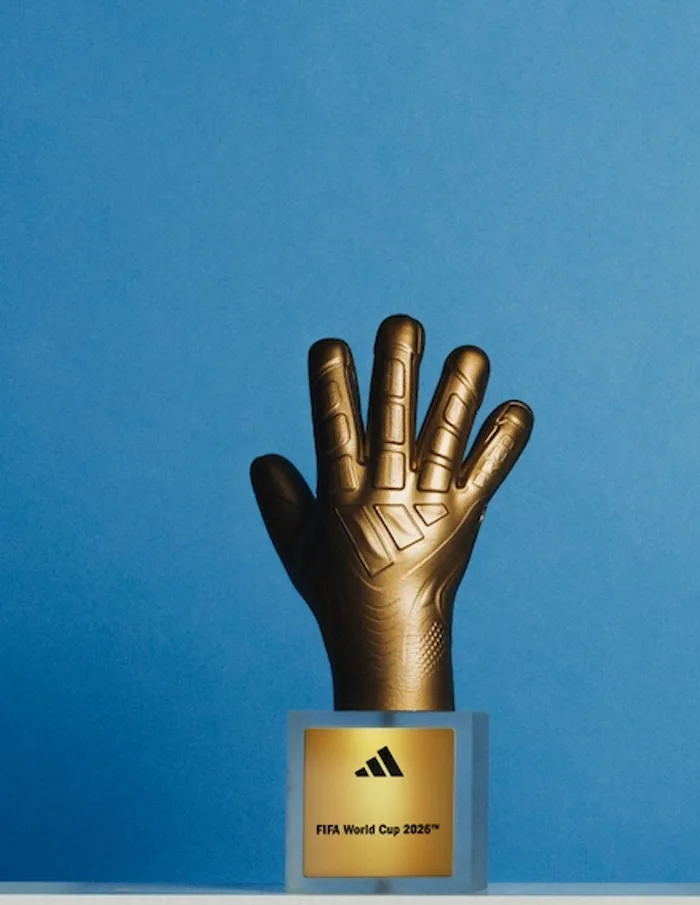
The Golden Glove was introduced in 1994 as the Lev Yashin Award, honoring the legendary Soviet goalkeeper, and adopted its current name at the 2010 World Cup in South Africa. Unlike the Golden Ball, the media does not vote here: it is decided directly by FIFA's Technical Study Group, based on the goalkeeper's performance across the whole tournament (saves, sweeping, command of the area, penalty-shootout performances).
| Edition | Golden Glove winner | Country |
|---|---|---|
| 2022 (Qatar) | Emiliano "Dibu" Martinez | Argentina |
| 2018 (Russia) | Thibaut Courtois | Belgium |
| 2014 (Brazil) | Manuel Neuer | Germany |
| 2010 (South Africa) | Iker Casillas | Spain |
| 2006 (Germany) | Gianluigi Buffon | Italy |
| 2002 (Korea/Japan) | Oliver Kahn | Germany |
| 1998 (France) | Fabien Barthez | France |
| 1994 (USA) | Michel Preud'homme | Belgium |
Oliver Kahn shows up twice in this guide for a reason: in 2002 he won both the Golden Ball and the Golden Glove (then still the Lev Yashin Award) in the same edition, a double no other player has repeated since.
Unlike the Golden Ball, the Golden Glove does not require reaching the final either. Thibaut Courtois won it in 2018 even though Belgium were eliminated in the semifinals by France (they finished third); what matters here is not a single stat like save count or clean sheets, but the technical panel's overall judgment of the goalkeeper's full performance: reflexes, sweeping outside the box, distribution with the feet and decision-making under pressure in the tournament's biggest moments.
Best Young Player: the age limit and its history
The Best Young Player award has been handed out since the 2006 World Cup in Germany, recognizing the standout footballer who is 21 or younger as of January 1 of the World Cup year. It is decided through a combination of fan voting on FIFA's official platform and input from the technical panel.
| Edition | Winner | Country |
|---|---|---|
| 2022 (Qatar) | Enzo Fernandez | Argentina |
| 2018 (Russia) | Kylian Mbappe | France |
| 2014 (Brazil) | Paul Pogba | France |
| 2010 (South Africa) | Thomas Muller | Germany |
| 2006 (Germany) | Lukas Podolski | Germany |
The 2018 winner, Kylian Mbappe, arrives at the World Cup 2026 as one of the favorites for this tournament's Golden Ball, eight years after taking home the young player award as a teenager.
World Cup Golden Ball vs. the Ballon d'Or: not the same award
This is one of the most common points of confusion, and it is worth clearing up:
- World Cup Golden Ball (FIFA): rewards only a player's performance during that specific four-week tournament. Run by FIFA.
- Ballon d'Or (France Football): the classic award handed out every year since 1956, rewarding a footballer's entire season, club and country combined. Run by the French magazine France Football, with no direct FIFA involvement.
They are independent honors, with different criteria, organizers and calendars, even though they share a name and often go to the same player when someone shines at a World Cup too.
Who is in the running for the World Cup 2026 Golden Ball so far
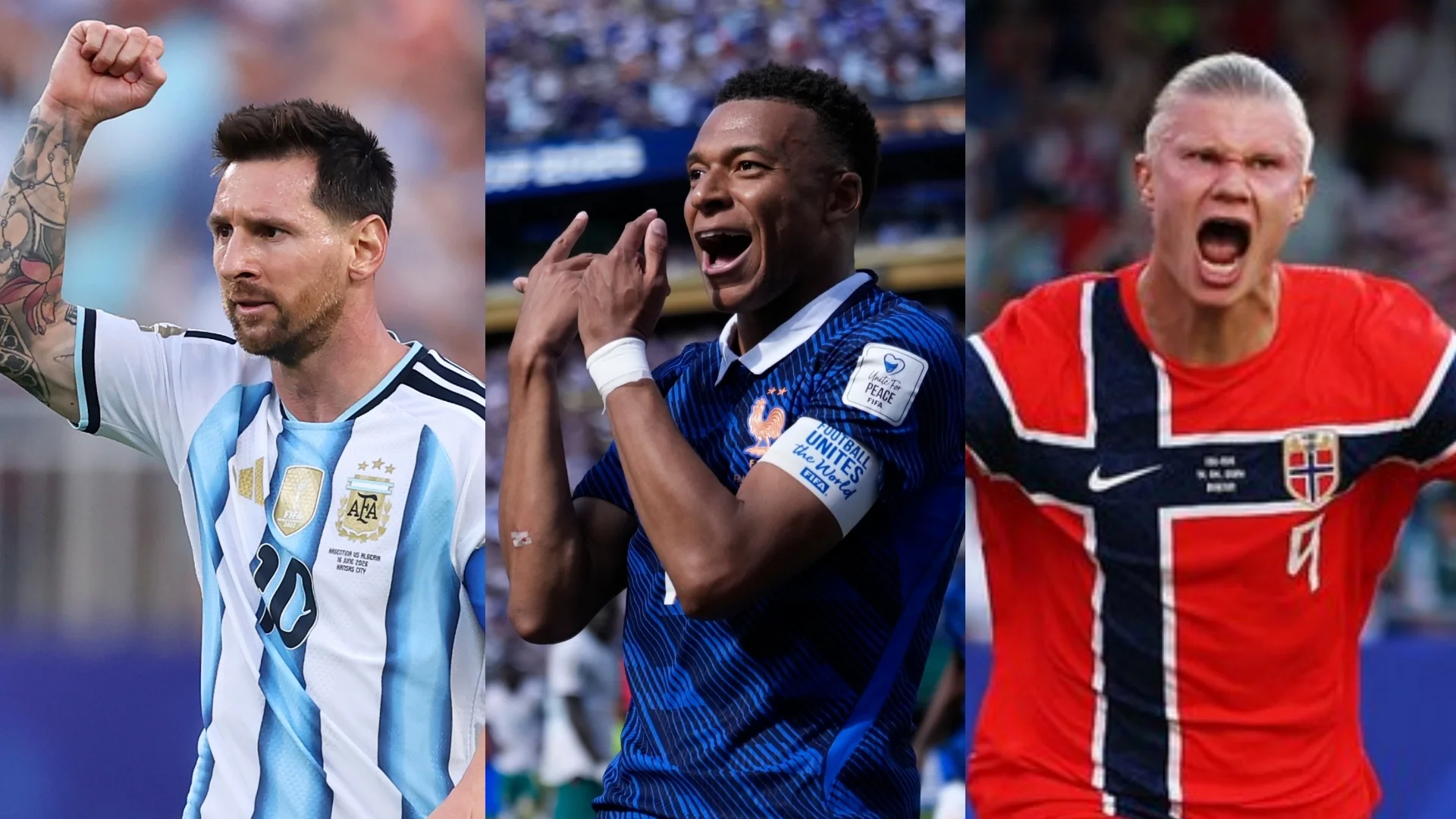
With the tournament in the Round of 16, the conversation is led by Kylian Mbappe and Lionel Messi, tied atop the top scorers table with 6 goals each, with both France and Argentina still alive in the knockout bracket. Erling Haaland is playing his first World Cup with Norway and already has 5 goals, one behind the leaders. Lamine Yamal, just 18, is leading a Spain side that reached the Round of 16 with one of the most talented generations in decades. Jude Bellingham and Vinicius Junior round out the group of candidates with England and Brazil, respectively, also still alive in the tournament.
As with every World Cup, the deciding factor will be how far each team goes: the Golden Ball almost always lands with a player whose team reaches at least the semifinals.
Who is in the running for the World Cup 2026 Golden Boot so far
Unlike the other three awards, the Golden Boot does not depend on any vote: it is decided by objective goal-scoring data, so it already has a clear leader today. Kylian Mbappe and Lionel Messi share the top spot with 6 goals each, closely followed by Erling Haaland and Harry Kane with 5. If the tie holds until the end, the first tiebreaker is assists, and if that is also tied, minutes played, so an assist in the matches still to come can matter just as much as a finish.
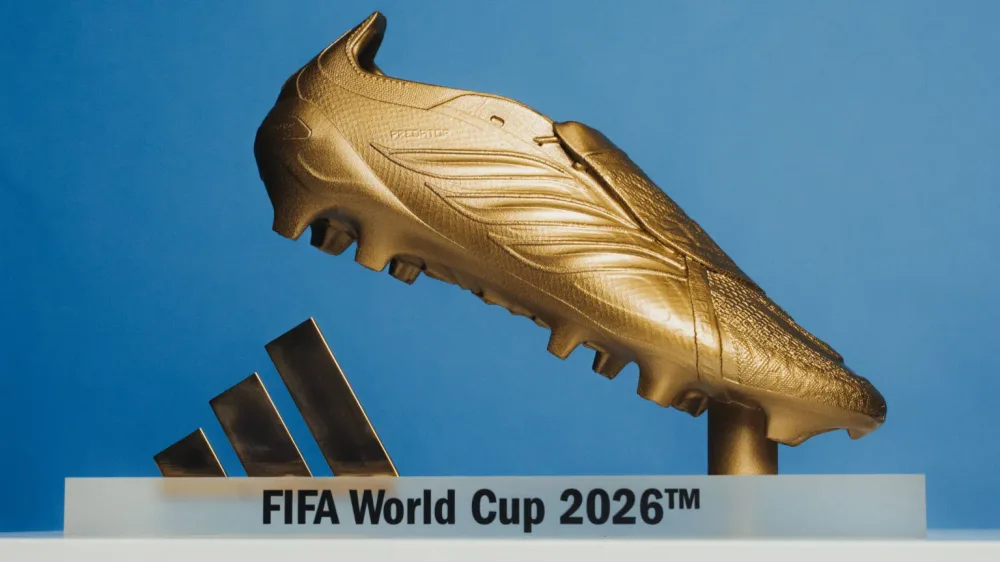
Unlike the Golden Ball or the Golden Glove, there is no need to reach the semifinals to win this one: at Russia 2018, Harry Kane took home the Golden Boot with England eliminated in the semifinals, and in 2014 James Rodriguez did the same with Colombia out in the quarterfinals. It is the most wide-open of the four awards, since it depends on an individual scoring streak rather than a collective result, one that can hold up even if a team is knocked out before the final. Follow the updated top scorers table to see how it shifts with every knockout match.
Who is in the running for the World Cup 2026 Golden Glove
Emiliano "Dibu" Martinez, the defending winner from Qatar 2022 and a penalty-shootout hero across two Copa America titles, remains Argentina's starting goalkeeper and one of the names to beat. But the Round of 32 produced a new contender: Orlando Gill, the Paraguayan goalkeeper who saved penalties from Kai Havertz and Nick Woltemade in the historic elimination of Germany, a performance that puts him firmly in the conversation if Paraguay keeps advancing. Goalkeeping is, by nature, the hardest individual award to project midway through a tournament: it is almost always decided in the semifinals and the final, when the pressure and stakes are at their highest.
Who is in the running for World Cup 2026 Best Young Player
The name on everyone's lips is Lamine Yamal (born 2007), Spain and FC Barcelona's winger, already a Euro 2024 champion at just 17 and one of the most hyped footballers of his generation. Endrick, the Brazilian forward developed at Palmeiras and now playing for Olympique Lyon, is another young name to watch as long as Brazil stays alive in the tournament. Both comfortably meet the award's age limit and reach this stage of the World Cup with their national teams still competing for the title.
What each candidate needs from here
At this point in the tournament, no candidate has the award locked up. Here is what is still missing for each one:
- Messi and Mbappe: they need Argentina and France to reach at least the semifinals. Tied on goals, the deciding factor will likely be who shines in the highest-pressure matches, not who scores more in the early rounds.
- Haaland: his first World Cup is already a statement, but Norway needs to get past Brazil in the Round of 16, a much bigger name in tournament history.
- Yamal: he has age on his side for several more World Cups, but for the 2026 Golden Ball he needs Spain to get through demanding matchups like the Round of 16 against Portugal.
- Orlando Gill: he needs Paraguay to keep producing upsets; his name is already part of the conversation after the Round of 32, but the Golden Glove is almost never decided before the semifinals.
- Bellingham and Vinicius Junior: both play for teams considered genuine title contenders, England and Brazil respectively, so their path is straightforward on paper: keep producing decisive moments as the matches get tougher, starting with Brazil's Round of 16 clash against Norway.
What is historically at stake in 2026
Beyond each match result, there are historical lines this World Cup could redraw. If Messi wins the Golden Ball for a third time, he would become the first player in history with three, something neither Zidane, Ronaldo nor Maradona achieved. If Mbappe wins it, he would complete a progression that started with the Best Young Player award in 2018, something no other player has managed within his own career. And if Yamal takes home the tournament's Golden Ball (not the Young Player award, which he is already well positioned for by age), he would become the youngest winner in the award's history, surpassing Ronaldo Nazario, who won it in 1998 at age 21. None of these records are guaranteed, and history shows the award often goes to a player few saw coming before the semifinals, but they give the closing stretch of this World Cup an extra layer worth following.
Other awards FIFA hands out
Beyond the three main awards, FIFA has presented the Fair Play Award since 1970, given to the team with the best disciplinary record of the tournament (fewest cards and red cards relative to matches played). Only teams that reach the second round are considered. Brazil leads the history with 4 awards, followed by Spain and England with 3 each. Peru, in 1970, remains the only team in World Cup history to win it without picking up a single yellow or red card across the whole tournament, a record nobody has matched since. One detail stands out for this site's audience: Colombia won the Fair Play Award at Brazil 2014, the same edition in which James Rodriguez took home the Golden Boot, one of the most fondly remembered World Cups in Colombian football history.
And, of course, there is the Golden Boot for the top scorer, already covered in the section above.
How to follow this race through to the final
With the Round of 16 still underway, any of these awards can change hands with every match still to be played. None of them are decided before the tournament's final week: the Golden Ball and Golden Glove shortlists only come together after FIFA's technical panel meets following the semifinals, and Best Young Player can hinge on a single decisive performance in the quarters or semis. The simplest way to follow the conversation is to track which teams are still alive: as long as Argentina, France, Spain, Brazil, England, Norway and Paraguay remain in the knockout bracket, their standout players will keep adding to their case for these individual awards.
Related articles
- Top scorers table and the Golden Boot race
- Round of 16: matchups and schedule
- Germany eliminated by Paraguay on penalties
- Favorites to win the World Cup 2026
- Knockout bracket · Standings · All teams
Sources: Wikipedia for the full history of winners; FIFA.com for the official criteria behind each award; ESPN for age-record details; Guinness World Records for the Fair Play Award history. World Cup 2026 details cross-checked against the site's internal schedule and results.
Frequently asked questions
What is the World Cup Golden Ball and who has won it before?
It is the award for the best player of the whole tournament, handed out since 1982. A FIFA technical committee draws up a shortlist and accredited journalists vote for the winner. Recent champions include Lionel Messi (2022 and 2014), Luka Modric (2018) and Diego Forlan (2010), even though Uruguay did not win the title that year.
What is the Golden Glove and how is the winner chosen?
It is the award for the tournament's best goalkeeper, called the Lev Yashin Award since 1994 in honor of the Soviet goalkeeper and renamed the Golden Glove in 2010. Unlike the Golden Ball, it is decided directly by the FIFA Technical Study Group, with no media vote.
What age limit applies to the Best Young Player award?
The player must be 21 or younger as of January 1 of the World Cup year. It has been awarded since 2006 and is decided through a mix of fan voting on FIFA's official platform and input from the technical panel.
What is the difference between the World Cup Golden Ball and the Ballon dOr
They are separate awards from separate organizations. The World Cup Golden Ball, run by FIFA, only rewards a player's performance during that specific tournament. The classic Ballon d'Or, handed out every year since 1956, rewards a footballer's entire season at both club and country level, and is organized by the French magazine France Football, with no direct FIFA involvement.
Who are the leading Golden Ball candidates at the World Cup 2026 so far?
With the tournament still in the Round of 16, Kylian Mbappe and Lionel Messi lead the conversation after tying atop the goalscoring table. Erling Haaland, Lamine Yamal, Jude Bellingham and Vinicius Junior are also in the running as long as their teams stay alive.
Is there a Golden Boot award at the World Cup 2026?
Yes, it is the award for the tournament's top scorer and is separate from the Golden Ball. Check the <a href="/en/blog/world-cup-2026-top-scorers-golden-boot">updated top scorers table and Golden Boot race</a> for the full ranking.
Article by
Luis MoralesJournalist and founder of the blog
Luis Morales is a professional journalist who graduated from Universidad del Externado de Colombia and the founder of this World Cup 2026 blog. He has worked for over three years as a copywriter specialized in football and major sporting events. Every article combines journalistic rigor with verification against official FIFA sources to deliver clear, accurate and useful information for fans.
Journalist and content writer · Universidad del Externado de Colombia · 3+ years
See all articles by Luis Morales →Explore more of the 2026 World Cup