 Spain, 2026 world champions
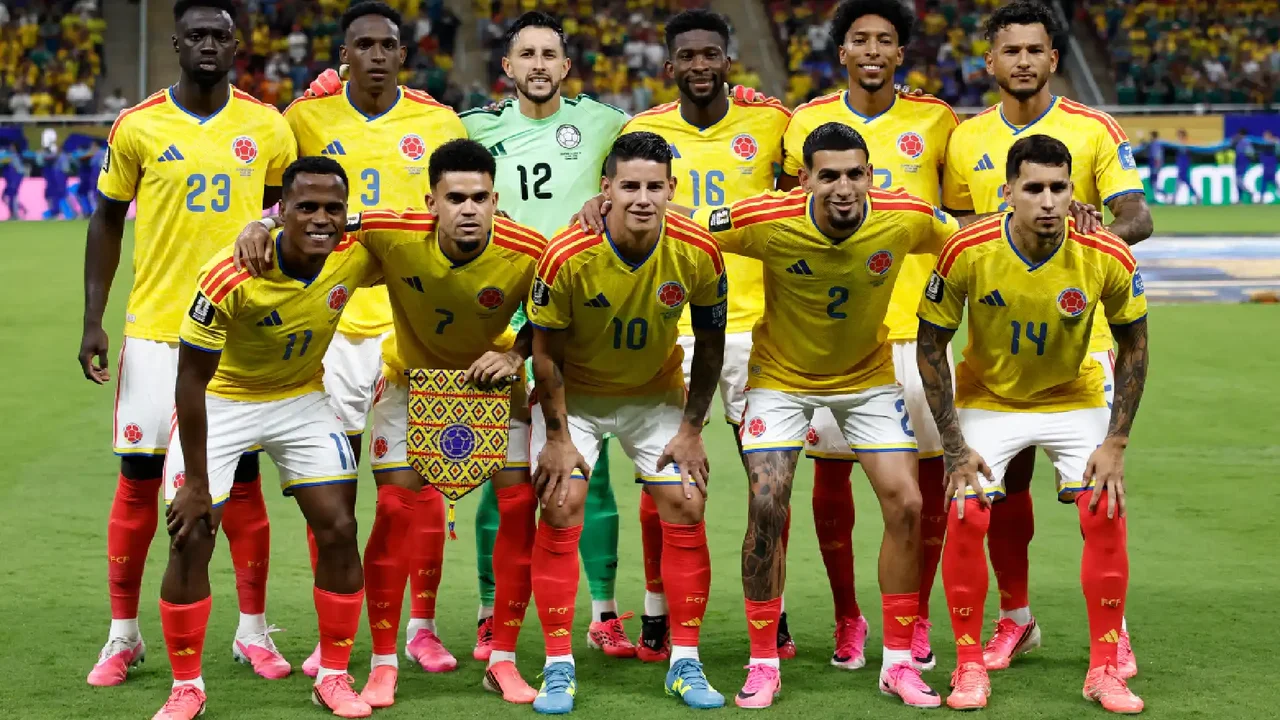
El Campín was painted yellow, blue and red. More than 36,000 Colombians filled the stands of the most iconic stadium in Colombian football to see their team one last time on home soil before flying to the World Cup. The preparation friendly against Costa Rica, the last Central American team to knock Colombia out of a World Cup, that June night in 2014 that still hurts, served as the backdrop for a dress rehearsal that left good feelings, some answers to questions Lorenzo had pending and the roar of El Campín buzzing past nine o'clock Bogotá time.
The final result was Colombia 3-1 Costa Rica. The scoreline is secondary. What Néstor Lorenzo came to El Campín for, tactical answers, the fitness of the call-ups, the performance of the debutants and Cucho Hernández's scoring debut, he found in abundance.
Context: the last time at home before the World Cup
This match had an emotional meaning beyond the 90 minutes. For many of the 26 call-ups, playing at El Campín on June 1 was the farewell to their own country before the most important event of their careers. Some, like David Ospina (37, Atlético Nacional), know it is possibly the last time they wear the Colombia shirt in a Colombian stadium. For others, like Richard Ríos (24, Benfica) or Gustavo Puerta (22, Racing Santander), it was the first match as starters for the senior team.
Lorenzo used the match with a clear plan: the first-choice eleven started the game, the second half was the territory of the substitutes with the most doubts heading into the debut against Uzbekistan on June 17. Costa Rica, who did not qualify for the 2026 World Cup after finishing fourth in CONCACAF qualifying, arrives at the match in a generational transition with Keylor Navas still as captain and reference between the posts.
Lineups
| Colombia (4-2-3-1) | Costa Rica (4-4-2) |
|---|---|
| Camilo Vargas | Keylor Navas |
| Daniel Muñoz, Jhon Lucumí, Dávinson Sánchez, Johan Mojica | Bryan Oviedo, Francisco Calvo, Óscar Duarte, Kendall Waston |
| Jefferson Lerma, Richard Ríos | Yeltsin Tejeda, Celso Borges |
| Jhon Arias, James Rodríguez, Cucho Hernández | Joel Campbell, Manfred Ugalde |
| Luis Díaz | Josimar Alcócer, Brandon Aguilera |
Colombia substitutions: Portilla (60', for Lerma), Carrascal (60', for Ríos), Puerta (67', for James), Campaz (67', for Jhon Arias), Córdoba (72', for Cucho), Gómez (72', for Díaz), Montero (85', for Vargas).
First half: James's quality and the Díaz and Cucho brace of goals
Colombia came out with the intensity Lorenzo has been demanding for months. There was none of the excess conservatism that sometimes characterizes preparation friendlies. The first ten minutes were feeling-out, with Costa Rica organized in a mid-low block and Colombia trying to find the space between the lines through James Rodríguez.
Minute 15: Luis Díaz 1-0
The opener came from a play Colombians know by heart. James Rodríguez received the ball on the right flank, turned his body inside and delivered that diagonal long pass no one else in Colombian football plays with such precision. The ball found Luis Díaz's run on the left edge of the box. The Bayern Munich winger did not need to control: one touch to adjust and a curling shot with the outside of his right foot that Keylor Navas could not reach. 1-0. El Campín erupted.
It was Díaz's 19th goal with the Colombian national team. An elite footballer's goal, made with ease, no fuss. The man who has spent a year at Bayern Munich playing with the same composure.
Minute 37: Cucho Hernández 2-0
The second came in a way that opens an interesting tactical conversation for Lorenzo. A Jhon Arias corner from the right, a tense, low cross to the near post, and Cucho Hernández, 27, Real Betis, anticipated Costa Rican center-back Óscar Duarte with a near-post header that gave Navas no time to react. A goal on his starting debut with the senior team. 2-0 at the break.
Cucho's season at Betis has been extraordinary: 22 goals and 11 assists in the Spanish league this season. He arrives at the World Cup in the best moment of his career. This goal was the recognition he needed after being left out of Reinaldo Rueda's squads.
Second half: Campbell's penalty, the Ríos screamer and Lorenzo's changes
Costa Rica came out with more drive in the second half. The Tica side has enough individual quality to create danger even if the team is not a top-10 outfit on the continent. In the 51st minute, a handball from Dávinson Sánchez inside the box, doubtful according to Colombia's own players, produced the penalty that Joel Campbell, 33, converted without flinching. 2-1. El Campín got nervous for fifteen minutes.
Lorenzo's changes: a lab for the World Cup
Néstor Lorenzo used the second half as what it was: a laboratory. Between minutes 60 and 72 he made seven changes. On came Juan Camilo Portilla, Jorge Carrascal, Gustavo Puerta, Jaminton Campaz, Jhon Córdoba and Carlos Andrés Gómez. The only untouchable was Camilo Vargas, who came off in the 85th minute to give Álvaro Montero a runout.
Of the substitutes who gave Lorenzo the most information: Gustavo Puerta (22, Racing Santander) stood out the most. The young midfielder showed speed of circulation, vision and a boldness to ask for the ball in tight spaces that no other midfielder in his position on the list has. A serious candidate to enter the first-choice eleven if Lerma or Ríos arrive at the debut with fitness doubts.
Minute 78: Richard Ríos 3-1
The goal that drew the loudest applause at El Campín was neither Díaz's nor Cucho's scoring debut. It was Richard Ríos's in the 78th minute. The Benfica midfielder received the ball 28 meters from goal, glanced at the Costa Rica keeper who had stepped slightly off his line, and unleashed a shot with the inside of his right foot that traced a perfect arc and dropped into the top right corner. Keylor Navas looked up, saw the ball go in and stood still. There was nothing to be done.
It was the kind of goal no one expects from a midfielder better known for his defensive work. El Campín responded with one of those ovations you rarely hear. 3-1. Game over.
Individual performances
| Player | Rating | Comment |
|---|---|---|
| Camilo Vargas | 7/10 | Safe and calm. He had no major interventions but conveyed serenity. The save on Manfred Ugalde's shot in the 43' was top-class. |
| Daniel Muñoz | 8/10 | The Crystal Palace full-back was electric. He pushed forward with judgment and his mirrored connection with Díaz down the left created constant danger. He is the undisputed starting right wing-back. |
| Dávinson Sánchez | 6/10 | Solid in the air and in playing out, but the 51' penalty marred a performance that would otherwise have been notable. An unfortunate handball on a play with no intent. |
| Jhon Lucumí | 7/10 | Aerial duels won with authority. Good management of the spaces when Costa Rica tried to do damage in transition in the second half. |
| Johan Mojica | 7/10 | Active down the left, though he sometimes leaves spaces that teams faster than Costa Rica could exploit. A technical assist on the first goal: he was the one who started the play. |
| Jefferson Lerma | 7/10 | The muscle of the midfield. He won the ball back, cut off transitions and gave Colombia the solidity it needed when the game was 2-1. |
| Richard Ríos | 9/10 | The best of the first half. He has a reading of the game that is surprising in a 24-year-old. And that 78' screamer is already El Campín history. If there was a reasonable doubt about whether he should start against Uzbekistan, this match resolved it. |
| Jhon Arias | 7/10 | Tireless. The Palmeiras player did a quiet but effective job: high pressing, precise crosses (the one for Cucho's goal) and good management when the match required controlling the rhythm. |
| James Rodríguez | 8/10 | James is 34 and plays at a mental rhythm his teammates are still learning to read. He did not run much, he never has, but every ball he touched was at the right time and in the right direction. The assist for Díaz was UEFA Champions League level. Is he still the right player? Yes. |
| Cucho Hernández | 9/10 | A starting debut, a near-post header, constant high pressing and two more shots that just missed. Lorenzo now knows he can trust him as an alternative to Luis Díaz in the first-choice eleven or as a second striker. Cucho's match was the big positive surprise of the night. |
| Luis Díaz | 9/10 | A goal, absolute technical superiority every time he received the ball, three dribbles that ended in a foul or a turnover by the rival. Díaz is Colombia's most important player for the World Cup. This match confirmed it once again, if it was needed. |
The debuts: what the new players left us
Cucho Hernández was the most anticipated debut and the one who responded the most. At Betis he has shown he has enough quality for Europe's A level. His goal, an anticipated near-post header, is the kind of movement strikers who know what they are doing inside the box execute on instinct. Lorenzo now has a real second-striker option who can play alongside Díaz or replace him depending on the match.
Gustavo Puerta came on in the 67' and in 23 minutes did more than some midfielders who have been in the squad for months. The Racing Santander midfielder is 22 and has a confidence on the ball that is not normal at that age in a national-team context. If Lerma or Ríos arrive at the debut with any knock, Puerta is ready.
Jaminton Campaz (Rosario Central) and Carlos Andrés Gómez (Vasco da Gama) had less prominence, mainly because they came on in a stretch where Colombia was already managing the scoreline and the pace dropped. Both brought intensity but without the impact of Cucho or Puerta.
Tactical analysis: what Lorenzo learned
Lorenzo's system is a 4-2-3-1 that on paper becomes a 4-3-3 when Daniel Muñoz pushes up and James drops back. Against Costa Rica it worked naturally because the rival let it play. The problem that will appear against Portugal on June 27 is different: the Portuguese will press high, close the passing lanes to James and try to make Luis Díaz always receive the ball with his back to goal and no space.
For that scenario, Lorenzo has two variables still to define. The first: can Richard Ríos cover for Lerma in the moments where Colombia needs more creativity in midfield? This match says yes. The second: how does Colombia respond when the rival cuts off the connection between James and Díaz? That answer will come in the second friendly against Jordan on June 7.
The defense, with Lucumí and Dávinson as the center-back pair, has the level to hold the forwards of Uzbekistan and DR Congo. If Colombia gets out of the group, which it should, in the knockout stage it could face a team like Germany or France. There the defense will need the match of its life.
Public opinion: what Colombia is saying after the match
Colombian social media after the match had three simultaneous conversations that reflect how football works in that country: the debate over whether James is still enough, the celebration of Cucho's goal and the Ríos screamer as signs of hope, and the recurring debate over whether Falcao should have been at the stadium tonight watching the match from the stands.
On Twitter/X, the hashtag #ColombiaMundial2026 was among the three most used of the night across all of Latin America. The majority of reactions were positive, with Richard Ríos's goal as the most shared clip. Colombian sports media like Caracol Deportes, Win Sports and El Tiempo rated the friendly as "the best possible preparation for the June 17 debut".
The only discordant note was Dávinson Sánchez's penalty. In a World Cup context, that kind of mistake can have bigger consequences. The criticism of the Galatasaray center-back was harsh in some media, although most analysts agreed it was an involuntary play within a globally correct performance.
Opinion: Colombia is ready, but Group K is not simple
This is the part Colombian football fans do not always want to hear, so I say it with affection and perspective: Colombia played well against Costa Rica because Costa Rica is a manageable rival. A team that did not qualify for the World Cup, with a generation in transition, with Keylor Navas as the only undisputed world-class player in its squad.
What I saw at El Campín tonight I like a lot, but it raises a question only the World Cup will be able to answer: how does this team react when the rival has more quality than Costa Rica? Group K has Portugal, who will not let James receive the ball with time. And in the knockout stage, if Colombia gets there, it will meet teams that will close the spaces Díaz and Cucho exploited freely tonight.
That said: Luis Díaz is in the best moment of his career. James is still Colombia's best creator. Richard Ríos has appeared at the right moment. And Néstor Lorenzo knows clearly what he wants. If there is a World Cup where Colombia can reach the quarterfinals, this is the one with the most chances. El Campín said goodbye to its team with real hope, not forced hope. That, in Colombian football, is no small thing.
What does this match mean for the World Cup?
Three concrete conclusions Lorenzo can take on the plane to Mexico:
- Richard Ríos is an undisputed starter. There is no possible debate after this performance. If Lerma acts as the defensive midfielder, Ríos must accompany him in the double pivot or play behind James. The 78' screamer is the icing, but what matters is that for 60 minutes he was the smartest player on the pitch.
- Cucho Hernández is a real first-choice option. He is not just a bench resource. He can play alongside Díaz or as a false nine when the match requires more mobility and high pressing. He has goals, intensity and confidence.
- The system works when rivals don't press. Lorenzo's 4-2-3-1 is effective when it has space. The big unknown of the World Cup remains what happens when that space does not exist. That is what the match against Jordan on June 7 is for.
Colombia debuts at the FIFA World Cup 2026 on June 17 at the Estadio Azteca in Mexico City against Uzbekistan. Tonight's match at El Campín was the perfect send-off: goals, emotion, tactical answers and the roar of 36,000 Colombians telling their team they will be waiting in the quarterfinals. May it be so.
To follow all of Colombia's matches at the World Cup, check the full 2026 World Cup schedule. The state of Group K with Portugal, Uzbekistan and DR Congo is in the groups section.
Frequently asked questions
What was the score in Colombia vs Costa Rica on June 1, 2026?
Colombia beat Costa Rica 3-1 in the preparation friendly played at Estadio El Campín in Bogotá on June 1, 2026. The Colombian goals came from Luis Díaz (15'), Cucho Hernández (37') and Richard Ríos (78'). Costa Rica's consolation goal was scored by Joel Campbell from the penalty spot in the 51st minute.
Who scored Colombia's goals against Costa Rica?
Luis Díaz opened the scoring in the 15th minute with a curling shot after a James Rodríguez assist. Cucho Hernández made it 2-0 in the 37' with a near-post header. Richard Ríos sealed the match in the 78' with a shot from outside the box that flew into Keylor Navas's right top corner.
Who made their Colombia debut in the friendly against Costa Rica?
Cucho Hernández (Real Betis) and Gustavo Puerta (Racing Santander) made their starting debuts with the Colombia senior team. Cucho also scored the second goal. Jaminton Campaz and Carlos Andrés Gómez also got minutes in the second half.
Where was the Colombia vs Costa Rica friendly played?
The match was played at Estadio El Campín in Bogotá, Colombia, on June 1, 2026 at 18:00 local time (23:00 UTC, 18:00 ET). The stadium was at full capacity with more than 36,000 spectators.
When is Colombia's next match after the friendly against Costa Rica?
Colombia has a second friendly on June 7, 2026 against Jordan in San Diego, California. It then debuts at the FIFA World Cup 2026 on June 17 against Uzbekistan at the Estadio Azteca in Mexico City.

Article by
Luis MoralesJournalist and founder of the blog
Luis Morales is a professional journalist who graduated from Universidad del Externado de Colombia and the founder of this World Cup 2026 blog. He has worked for over three years as a copywriter specialized in football and major sporting events. Every article combines journalistic rigor with verification against official FIFA sources to deliver clear, accurate and useful information for fans.
Journalist and content writer · Universidad del Externado de Colombia · 3+ years
See all articles by Luis Morales →Explore more of the 2026 World Cup