 Spain, 2026 world champions
In short: The Adidas Trionda is the official World Cup 2026 ball. Its name combines "Tri" (three host nations) and "onda" (the wave shape of its panels). With just 4 panels, a 500 Hz sensor and connected ball technology, it is the most advanced ball in World Cup history.
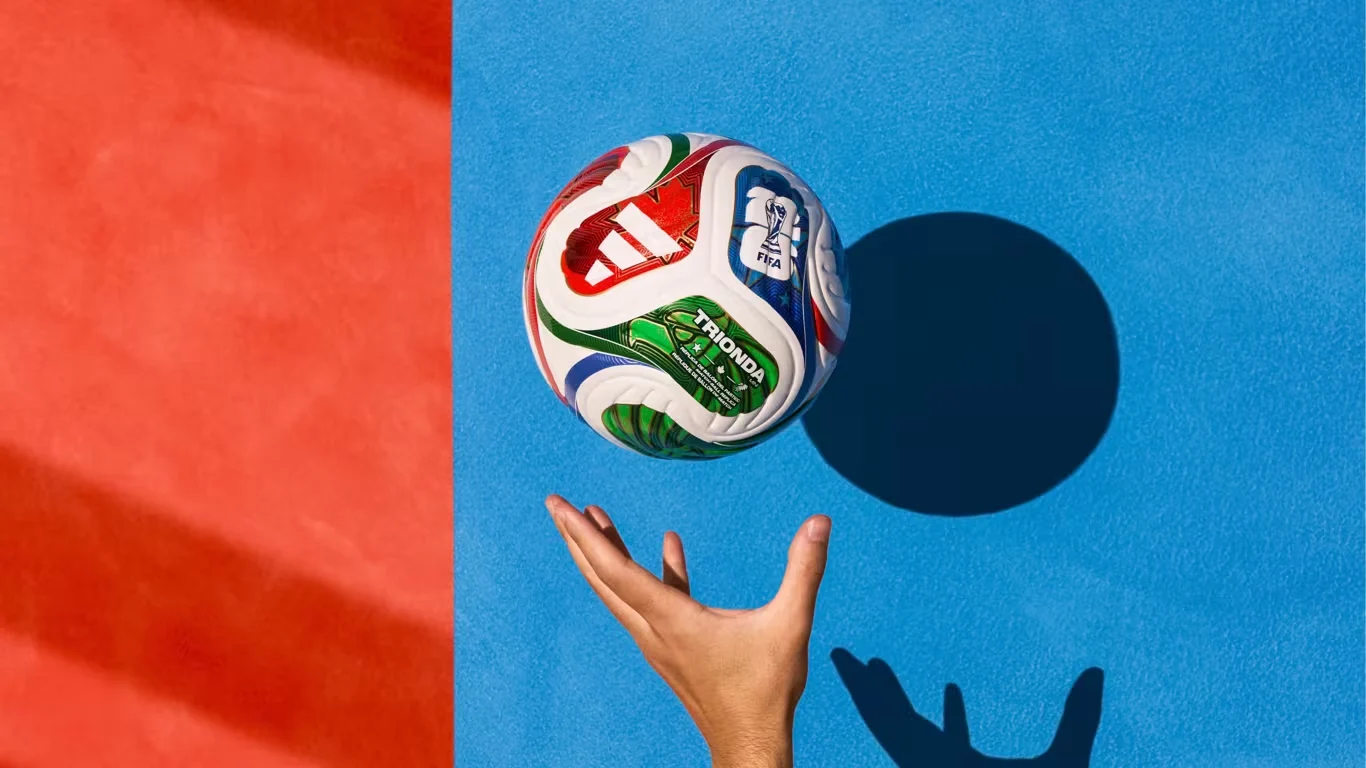
Adidas Trionda: the World Cup 2026 ball
The meaning of the name
The name Trionda combines two ideas: "Tri", a reference to the three host countries (United States, Mexico and Canada), and "onda" (wave), describing the wavy shape of the panels that make up the ball's surface. It captures the essence of the tournament: three nations united by football, represented across every inch of the ball that rolls in the 16 World Cup 2026 venues.
Visual design: three countries in one ball
The Trionda is visually unmistakable. Its surface combines green, red, blue and white tones representing the flags of the three host countries. But the design goes beyond color: it includes a star for the United States, a maple leaf for Canada and an eagle for Mexico. The golden accents pay tribute to the FIFA World Cup trophy. The result is a ball that works as a symbol of the most diverse and ambitious tournament in history.
The technology behind the Trionda
4-panel construction
The evolution is radical: while the legendary 1970 Telstar used 32 panels (20 white hexagons and 12 black pentagons), the Trionda uses a construction of just 4 panels with deep seams. This reduction is not only aesthetic. Fewer panels optimize the ball's aerodynamic stability, reducing unpredictable movement in the air and offering a more consistent trajectory on shots, passes and crosses. The deep seams, in turn, improve grip and control, especially in wet conditions.
500 Hz sensor and connected ball
The Trionda Pro version (used in official matches) features a 500 Hz motion sensor that records the ball's position, speed and spin 500 times per second. This technology, called connected ball, works together with VAR and artificial intelligence systems to revolutionize refereeing decisions. The sensor can detect with millimeter precision whether the ball crossed the goal line, helping with offside and handball calls.
A ball that charges like a phone
One of the most surprising facts about the Trionda Pro is that it needs an electric charge. The chip and internal sensor system require power to work during the 90 minutes of play. Before each match, the balls are placed in special charging stations. The replica version (sold to the public) has no chip and needs no charging, but keeps the same design and 4-panel construction.
History of World Cup balls
Adidas has made the official ball of every World Cup since 1970. The technological evolution has been constant: from the 32 hand-stitched panels of the Telstar to the 4 thermo-bonded panels of the Trionda. Each ball reflects the technology and spirit of its era.
| Year | Host | Ball | Panels | Key innovation |
|---|---|---|---|---|
| 1970 | Mexico | Telstar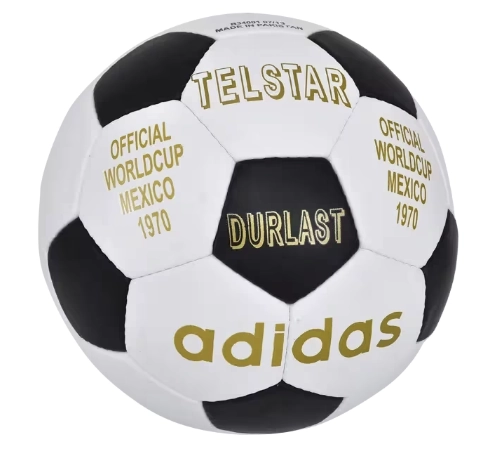 Telstar · Mexico 1970 Telstar · Mexico 1970 | 32 | First iconic black/white design |
| 1974 | Germany | Telstar Durlast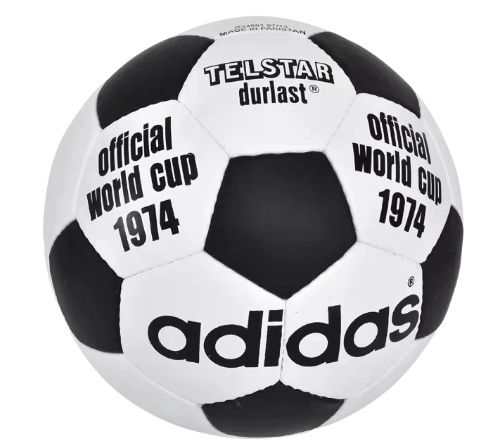 Telstar Durlast · Germany 1974 Telstar Durlast · Germany 1974 | 32 | Waterproof coating |
| 1978 | Argentina | Tango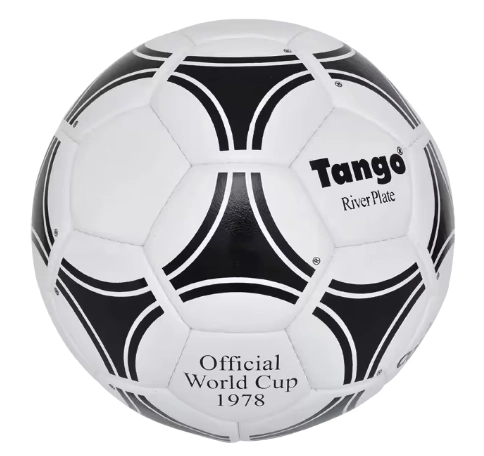 Tango · Argentina 1978 Tango · Argentina 1978 | 32 | Triangle design (used until 1998) |
| 1982 | Spain | Tango España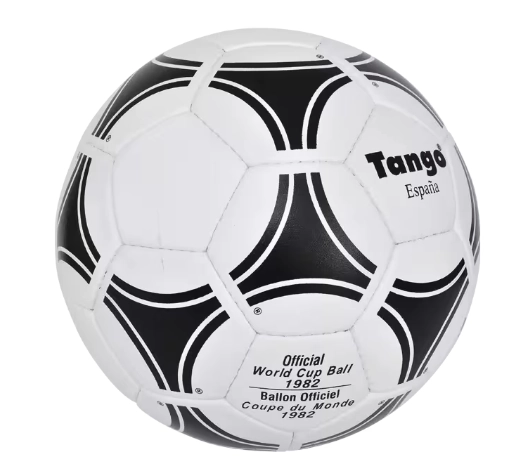 Tango España · 1982 Tango España · 1982 | 32 | First waterproof seams |
| 1986 | Mexico | Azteca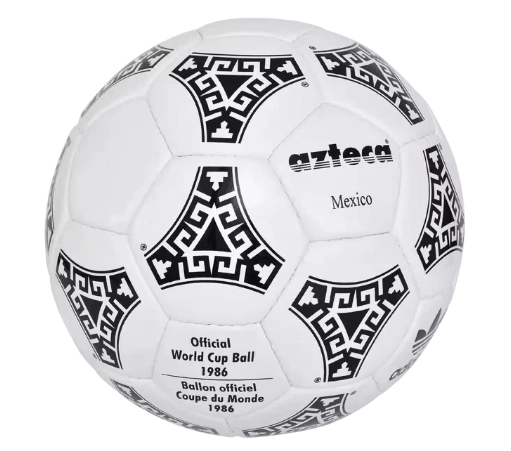 Azteca · Mexico 1986 Azteca · Mexico 1986 | 32 | First fully synthetic ball |
| 1990 | Italy | Etrusco Unico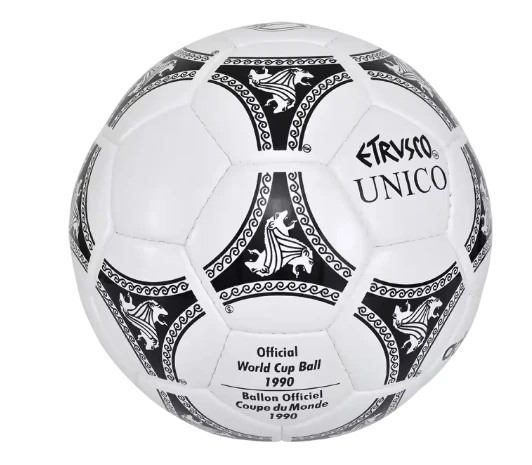 Etrusco Unico · Italy 1990 Etrusco Unico · Italy 1990 | 32 | Internal foam layer |
| 1994 | United States | Questra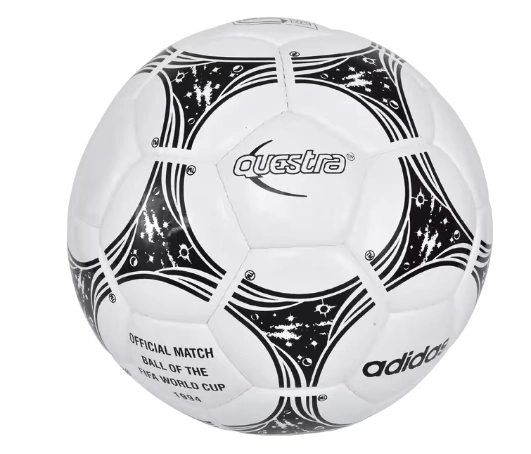 Questra · USA 1994 Questra · USA 1994 | 32 | Woven fiber mesh |
| 1998 | France | Tricolore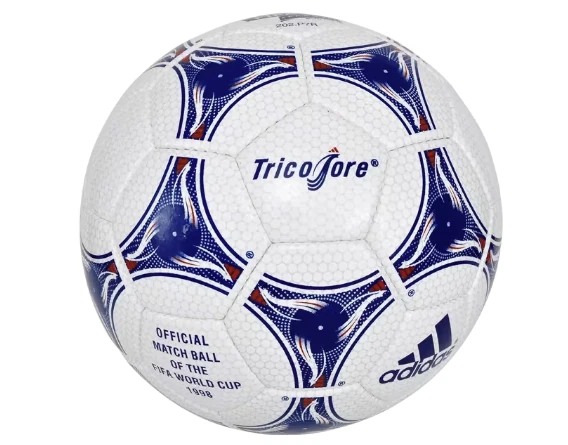 Tricolore · France 1998 Tricolore · France 1998 | 32 | First multicolor ball |
| 2002 | Korea/Japan | Fevernova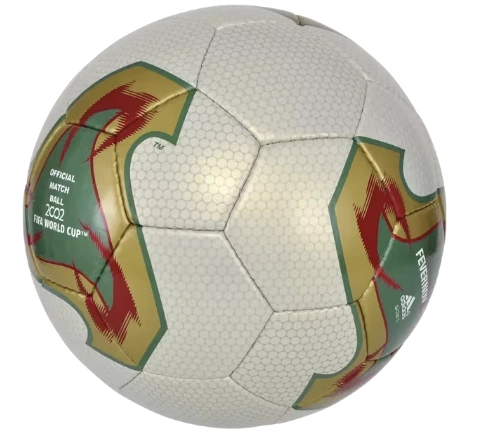 Fevernova · Korea/Japan 2002 Fevernova · Korea/Japan 2002 | 32 | Refined synthetic foam layer |
| 2006 | Germany | Teamgeist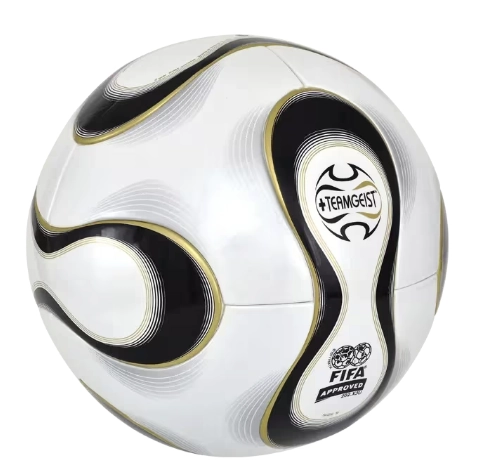 Teamgeist · Germany 2006 Teamgeist · Germany 2006 | 14 | Thermo-bonded panels (seamless) |
| 2010 | South Africa | Jabulani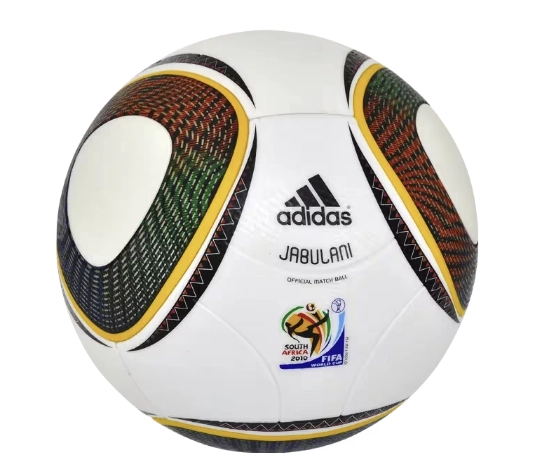 Jabulani · South Africa 2010 Jabulani · South Africa 2010 | 8 | Near-perfect sphere (controversial) |
| 2014 | Brazil | Brazuca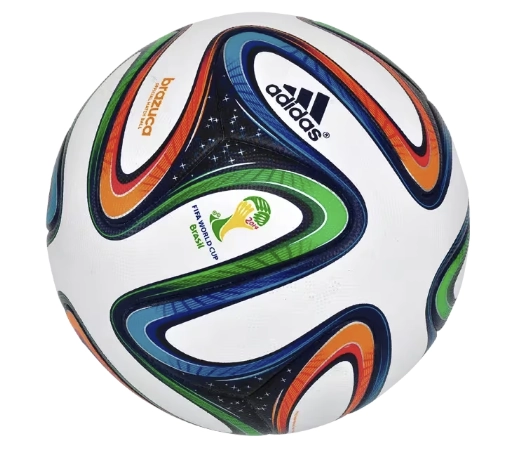 Brazuca · Brazil 2014 Brazuca · Brazil 2014 | 6 | Symmetric textured panels |
| 2018 | Russia | Telstar 18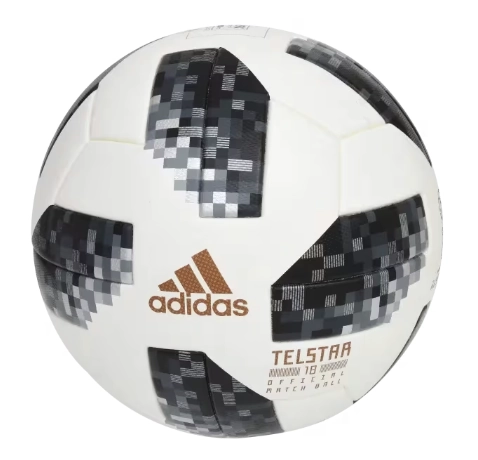 Telstar 18 · Russia 2018 Telstar 18 · Russia 2018 | 6 | Integrated NFC chip |
| 2022 | Qatar | Al Rihla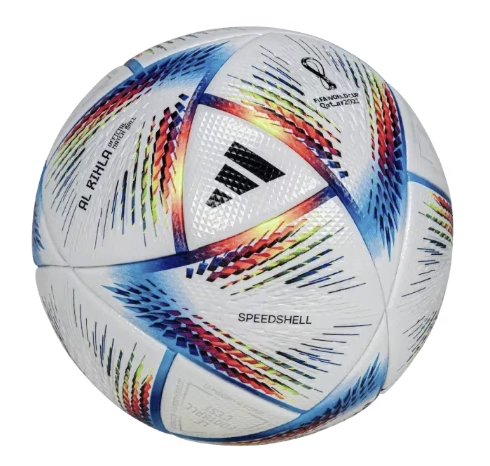 Al Rihla · Qatar 2022 Al Rihla · Qatar 2022 | 20 | Motion sensor + VAR |
| 2026 | USA/MX/CA | Trionda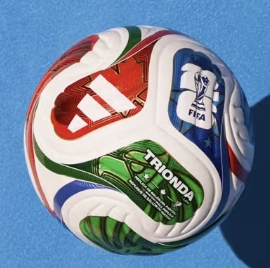 Trionda · USA/MX/CA 2026 Trionda · USA/MX/CA 2026 | 4 | 500 Hz, recharge, AI + VAR |
The most iconic balls
Some balls transcended the tournament and became symbols of football. The Telstar (1970) defined what a football looks like in the collective imagination with its black-and-white pattern, designed to be visible on the black-and-white broadcasts of the time. The Tango (1978) introduced the triangle design that lasted five World Cups. The Jabulani (2010) was the most controversial: its unpredictable flight drew complaints from keepers and defenders. The Brazuca (2014) fixed those problems and is considered one of the best balls in history.
The evolution of the panels
Reducing the panel count is the clearest trend in the history of World Cup balls:
- 1970-2002: 32 hand-stitched panels. The classic design everyone recognizes.
- 2006: a jump to 14 thermo-bonded panels with the Teamgeist.
- 2010: 8 panels with the controversial Jabulani.
- 2014-2018: 6 panels with Brazuca and Telstar 18.
- 2022: 20 panels with Al Rihla (a partial reversal).
- 2026: just 4 panels with the Trionda. An all-time low.
The Trionda in action: the first matches
The debut at the Azteca
The Adidas Trionda made its official debut on June 11, 2026 at Estadio Azteca during the Mexico 2-0 South Africa opening match. The first goal scored with the Trionda came from Julián Quiñones in the 9th minute, a strike that opened both the tournament and the era of the 4-panel ball. Since then, the Trionda has featured in memorable moments: Messi's hat-trick against Algeria (3-0), Colombia's win over Uzbekistan (3-1) and England's 4-2 over Croatia.
Players' opinions
Players have praised the Trionda's stability compared with previous balls. Unlike the controversial 2010 Jabulani, which drew criticism for its erratic flight, the Trionda offers a predictable trajectory and a good feel on both short passes and long-range shots. The deep seams of the 4 panels make instep control easier and allow players to put spin on the ball more precisely. Goalkeepers, for their part, note that the surface texture improves grip on saves.
Trionda versions: Pro vs. replica
| Feature | Trionda Pro (official) | Trionda replica |
|---|---|---|
| Use | Official FIFA matches | Recreational / collectible |
| Panels | 4 (thermo-bonded) | 4 (machine-stitched) |
| 500 Hz sensor | Included | Not included |
| Connected ball | Yes (VAR + AI) | No |
| Charging | Needs electric charge | Not needed |
| Certification | FIFA Quality Pro | FIFA Quality |
Follow the 2026 World Cup
- Interactive World Cup 2026 bracket: visualize each team's path.
- World Cup 2026 mascots: Zayu, Clutch and Maple.
- World Cup 2026 venues and stadiums.
- All 48 teams in the 2026 World Cup.
- Full schedule: all 104 matches.
- Today's matches: kickoff times, scores and where to watch.
Sources: FIFA.com for official ball specifications. Historic ball data verified against Adidas and FIFA archives. Updated: June 19, 2026.
Frequently asked questions
What is the World Cup 2026 ball called?
The official World Cup 2026 ball is called Adidas Trionda. The name combines "Tri" (for the three host countries) and "onda" (Spanish for wave, after the wavy shape of its panels).
What technology does the Trionda World Cup 2026 ball have?
The Adidas Trionda features a 500 Hz motion sensor and connected ball technology that works with VAR and AI systems for refereeing decisions. The Pro version recharges electrically like a phone.
How many panels does the World Cup 2026 ball have?
The Adidas Trionda has just 4 panels with deep seams, a radical evolution from the 1970 Telstar that had 32 panels. This construction optimizes aerodynamic stability and reduces unpredictable movement.
What colors does the Trionda World Cup 2026 ball have?
The Trionda combines green, red, blue and white tones in reference to the flags of the three host countries. It includes a star (USA), a maple leaf (Canada) and an eagle (Mexico), with golden accents for the World Cup trophy.
Where can I buy the World Cup 2026 ball?
The Adidas Trionda is available at Adidas stores, official FIFA stores in the stadiums, and sports retailers. There is a replica version (no chip) and the Pro version with connected ball technology.
Who makes the World Cup 2026 ball?
Adidas makes the official World Cup 2026 ball, as it has for every World Cup since 1970. The Trionda is the German brand's 15th World Cup ball.
Article by
Luis MoralesJournalist and founder of the blog
Luis Morales is a professional journalist who graduated from Universidad del Externado de Colombia and the founder of this World Cup 2026 blog. He has worked for over three years as a copywriter specialized in football and major sporting events. Every article combines journalistic rigor with verification against official FIFA sources to deliver clear, accurate and useful information for fans.
Journalist and content writer · Universidad del Externado de Colombia · 3+ years
See all articles by Luis Morales →Explore more of the 2026 World Cup