 Spain, 2026 world champions
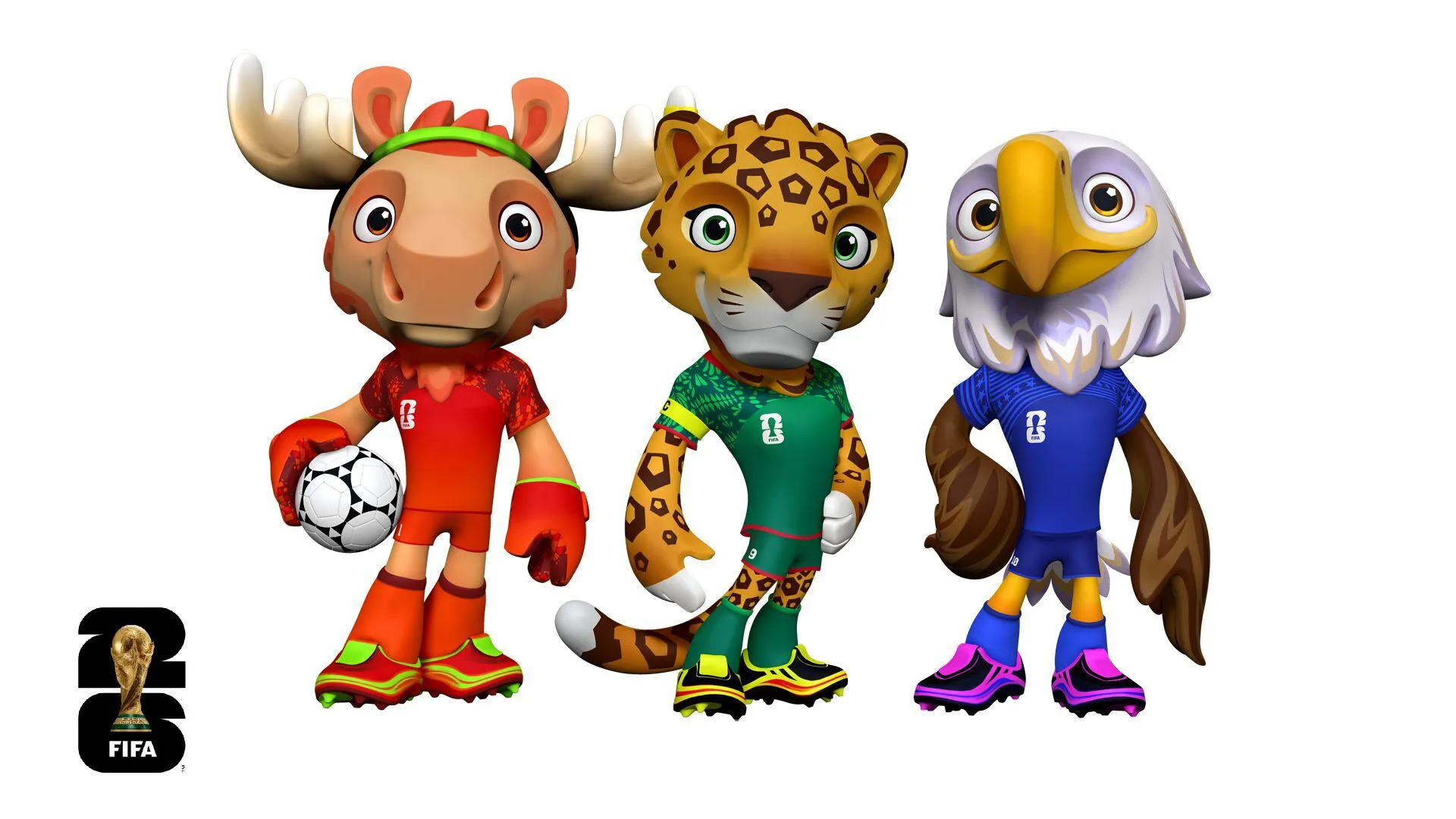
In short: The 2026 World Cup has three official mascots, one for each host country: Zayu (jaguar, Mexico), Clutch (bald eagle, United States) and Maple (moose, Canada). It is the first time in history that a World Cup features three simultaneous mascots, reflecting the tournament's tri-national nature.
The three World Cup 2026 mascots
FIFA unveiled the official 2026 World Cup mascots in September 2025. Unlike previous editions where a single character represented the tournament, this time there are three: a jaguar, a bald eagle and a moose. Each represents one of the three host countries (Mexico, the United States and Canada) and together they form a team that symbolizes the union of three nations through football. The mascots are not just decorative figures: they appear on merchandise, at events and stadiums, and for the first time they are playable characters in the video game FIFA Heroes.
| Mascot | Animal | Country | Position | Meaning |
|---|---|---|---|---|
| Zayu | Jaguar | Mexico | Forward (#9) | Power, bravery, Maya heritage |
| Clutch | Bald eagle | United States | Midfielder | Precision, determination, freedom |
| Maple | Moose | Canada | Goalkeeper | Strength, nature, community |
Zayu: the Mexican jaguar
Origin and cultural meaning
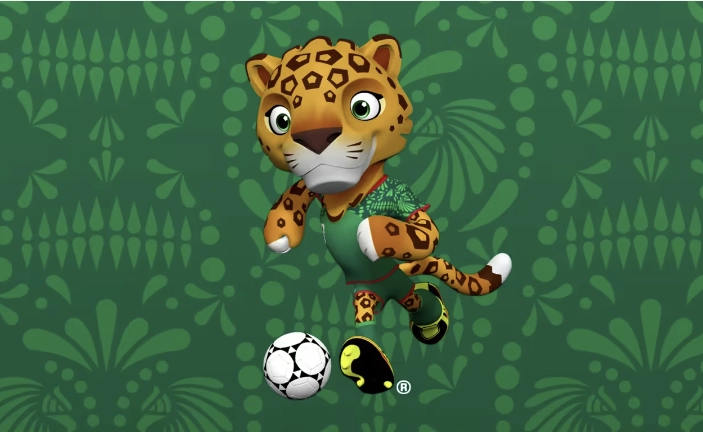
Zayu comes from the jungles of southern Mexico and is a jaguar wearing the green shirt of El Tri with the number 9. The jaguar carries deep meaning in Mexican culture: it was revered by the Maya as a symbol of power and bravery and held a central place in the cosmology of Mesoamerican civilizations. The name Zayu is inspired by unity, strength and joy, with possible ties to the Mixtec word "Dzahui", which means rain in the language of one of Mexico's indigenous peoples.
Personality and role in the tournament
As the trio's forward, Zayu is known for his exceptional wit and agility. He represents the vibrant spirit of Mexico: the passion for football, the rich cuisine, the dance and the traditions that bring people together across borders. He is the fourth feline mascot in World Cup history, after Goleo VI (lion, Germany 2006) and Zakumi (leopard, South Africa 2010). For Mexico, Zayu embodies the pride of co-hosting for the third time after 1970 and 1986.
Clutch: the American bald eagle
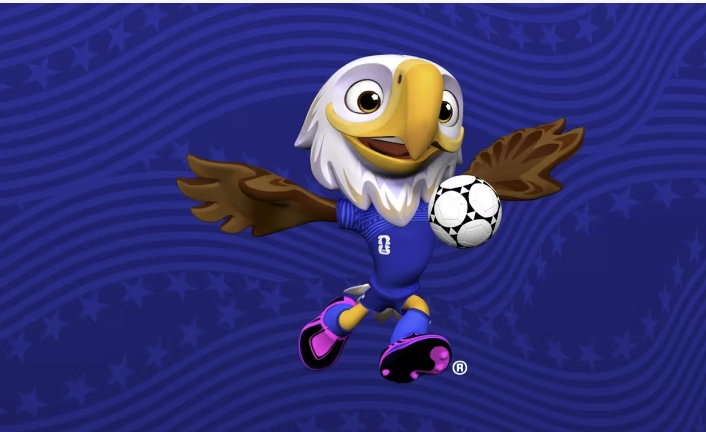
The national bird of the United States
Clutch is a bald eagle, the national bird of the United States and a symbol of freedom and determination that has appeared on the country's seal since 1782. As the trio's midfielder, Clutch represents the precision and vision that links defense to attack. Its name ("clutch" means decisive in key moments) reflects the American competitive mindset and the ability to perform under pressure.
The United States as main host
With 11 of the 16 World Cup 2026 venues on U.S. soil, Clutch is the mascot with the largest geographic footprint in the tournament. The bald eagle represents the diversity and ambition of a country hosting the World Cup for the second time (the first was in 1994) and looking to cement football as one of the nation's leading sports.
Maple: the Canadian moose
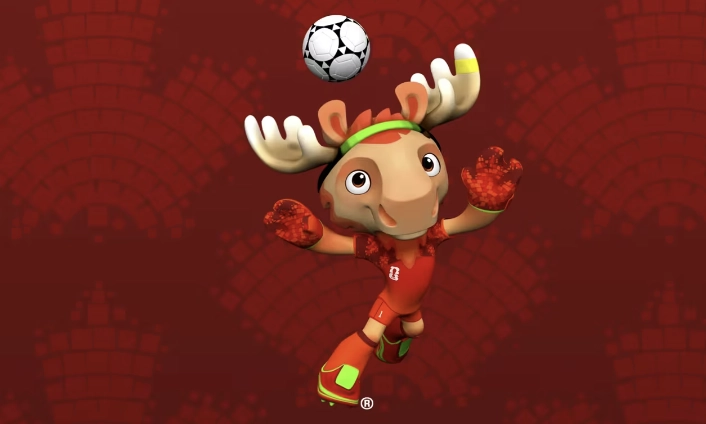
The team's goalkeeper
Maple is a moose representing Canada, the third host country. Its name comes from the maple, the national tree whose leaf appears on the Canadian flag. As the trio's goalkeeper, Maple symbolizes the strength, protection and community spirit of Canada. The moose is one of the most emblematic animals of Canadian wildlife, known for its imposing presence in the country's boreal forests.
Canada in its first World Cup as host
For Canada, co-hosting the 2026 World Cup is a historic milestone. It is the first time the country organizes a men's World Cup, and Maple represents that founding moment. With two venues (BC Place in Vancouver and BMO Field in Toronto), the Canadian mascot connects the west coast with the east coast of the world's second-largest country by territory.
Every World Cup mascot: the full history
World Cup mascots date back to 1966, when England introduced Willie, a lion wearing the Union Jack. Since then, every tournament has had at least one official mascot reflecting the host country's culture. Here is the complete list:
| Year | Host | Mascot | Animal/Character |
|---|---|---|---|
| 1966 | England | Willie | Lion |
| 1970 | Mexico | Juanito | Boy with a hat |
| 1974 | West Germany | Tip and Tap | Two boys |
| 1978 | Argentina | Gauchito | Gaucho boy |
| 1982 | Spain | Naranjito | Orange |
| 1986 | Mexico | Pique | Jalapeño pepper |
| 1990 | Italy | Ciao | Stick figure |
| 1994 | United States | Striker | Dog |
| 1998 | France | Footix | Rooster |
| 2002 | Korea/Japan | Ato, Kaz and Nik | Digital creatures |
| 2006 | Germany | Goleo VI | Lion |
| 2010 | South Africa | Zakumi | Leopard |
| 2014 | Brazil | Fuleco | Armadillo |
| 2018 | Russia | Zabivaka | Wolf |
| 2022 | Qatar | La'eeb | Animated keffiyeh |
| 2026 | USA/MX/CA | Zayu, Clutch, Maple | Jaguar, Eagle, Moose |
Mascots that defined an era
Some mascots transcended the tournament and became cultural icons. Juanito (Mexico 1970) was the first mascot to represent the host's national identity. Naranjito (Spain 1982) became a pop-culture phenomenon with its own animated series. Zakumi (South Africa 2010) represented the diversity of the African continent at its first World Cup. And now, Zayu, Clutch and Maple make history as the first trio of mascots, reflecting the unprecedented scale of a tournament across three countries.
The Mexican connection: from Juanito to Zayu
Mexico has a special relationship with World Cup mascots. Juanito in 1970 was a boy in a charro hat reflecting the traditional image of Mexico. Pique in 1986 was a jalapeño pepper with a moustache and a hat, a nod to Mexican cuisine. Now, Zayu in 2026 raises the representation by connecting with the country's pre-Hispanic roots through the Maya jaguar. The evolution from Juanito to Zayu reflects how Mexico has transformed its cultural narrative: from the sombrero stereotypes to pride in its indigenous heritage.
The mascots in the FIFA Heroes video game
For the first time in history, World Cup mascots will be playable characters in a video game. Zayu, Clutch and Maple appear in FIFA Heroes, available on Nintendo, PlayStation, Xbox and other platforms. Each mascot has unique abilities based on its position: Zayu as a fast forward, Clutch as a midfielder with vision and Maple as a goalkeeper with exceptional reflexes. This digital integration marks a turning point in how FIFA connects with new generations of fans.
Where to find the mascots at the 2026 World Cup
At the stadiums
Zayu, Clutch and Maple are present at all 16 World Cup 2026 venues. The characters appear at opening ceremonies, half-time shows, fan zones and pre-match activities. At Mexico's stadiums (Azteca, BBVA and Akron), Zayu has a special presence with cultural activations featuring dance, food and traditional music.
Merchandise and collectibles
FIFA launched a full line of official products for the three mascots: plush toys, shirts, caps, keychains, mugs and collectible figures. Zayu plush toys have been the best sellers at Mexican stadium stores, while Clutch leads sales at U.S. venues. Collectibles are available at official FIFA stores inside each stadium and online.
The meaning of a mascot trio
FIFA's decision to create three mascots instead of one carries deep meaning. The 2026 World Cup is the first with 48 teams and the first hosted by three nations at once. The mascots reflect that diversity: a Mesoamerican jaguar, a North American eagle and a boreal moose represent completely different ecosystems, cultures and traditions that come together under a single goal. The trio also forms a miniature football team (forward, midfielder and goalkeeper), reinforcing the message that the 2026 World Cup is a collective effort where every piece is essential.
Follow the 2026 World Cup
- Interactive World Cup 2026 bracket: visualize each team's path.
- World Cup 2026 venues and stadiums: the tournament's 16 grounds.
- All 48 teams in the 2026 World Cup.
- Full schedule: all 104 matches.
- Today's matches: kickoff times, scores and where to watch.
Sources: FIFA.com for official mascot information. Historical data verified against FIFA archives. Updated: June 19, 2026.
Frequently asked questions
What are the World Cup 2026 mascots called?
The three official mascots are Zayu (a jaguar representing Mexico), Clutch (a bald eagle representing the United States) and Maple (a moose representing Canada). It is the first time a World Cup has had three official mascots.
What animal is Zayu, the World Cup 2026 mascot?
Zayu is a jaguar from the jungles of southern Mexico. The jaguar is a sacred animal in Maya culture, a symbol of power and bravery. Zayu plays as a forward wearing number 9 on Mexico's green shirt.
What do the World Cup 2026 mascots' names mean?
Zayu is inspired by unity, strength and joy, with possible ties to the Mixtec word "Dzahui" (rain). Clutch reflects the precision and determination of the American bald eagle. Maple is named after the Canadian maple, Canada's national symbol.
How many mascots have there been in World Cup history?
Since 1966 (Willie in England), every World Cup has had an official mascot. The 2026 World Cup is the first with three simultaneous mascots, one for each host country.
Do the World Cup 2026 mascots appear in video games?
Yes. Zayu, Clutch and Maple will be playable characters in the video game FIFA Heroes, available on Nintendo, PlayStation, Xbox and other platforms. It is the first time World Cup mascots are interactive characters in a video game.
Article by
Luis MoralesJournalist and founder of the blog
Luis Morales is a professional journalist who graduated from Universidad del Externado de Colombia and the founder of this World Cup 2026 blog. He has worked for over three years as a copywriter specialized in football and major sporting events. Every article combines journalistic rigor with verification against official FIFA sources to deliver clear, accurate and useful information for fans.
Journalist and content writer · Universidad del Externado de Colombia · 3+ years
See all articles by Luis Morales →Explore more of the 2026 World Cup