 Spain, 2026 world champions
Mexico City is the most iconic host city of the 2026 World Cup: it hosts the opening match and makes the Estadio Azteca the first venue to host three World Cups (1970, 1986 and 2026). The Mexican capital will host 5 matches, a free Fan Festival in the Zócalo and all the infrastructure of one of the largest metropolises in the world. This guide covers everything you need to know to experience Mexico City World Cup 2026: teams, transport, lodging, food and a 48-hour itinerary.
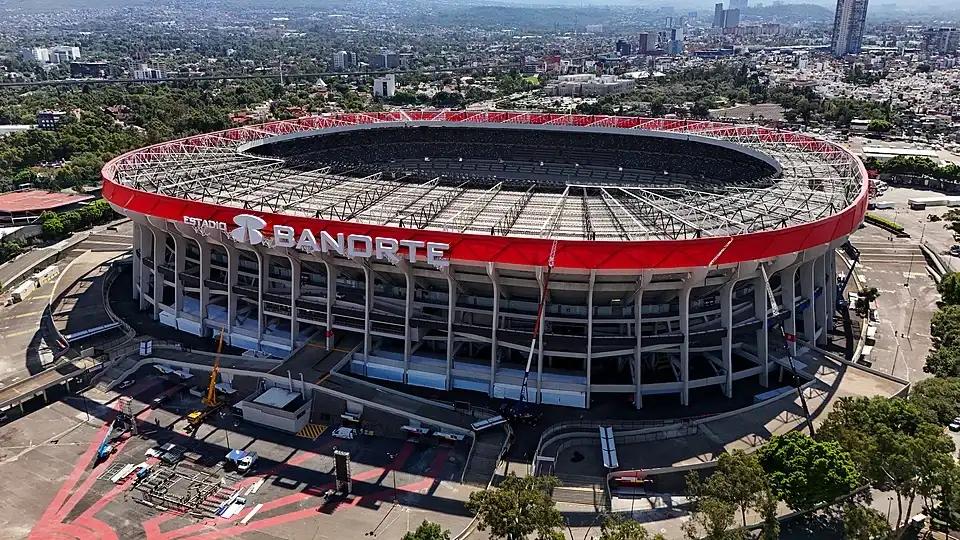
Capacity: 72,766 spectators
3 group + R32 + Round of 16
Zócalo, Historic Center
Line 12, Estadio Azteca station
The Estadio Azteca: history and facts
The Estadio Azteca World Cup 2026 is not just another venue. Opened in 1966 with capacity for over 72,000 spectators, the Azteca has been the stage for moments that defined the history of football. In 1970 it hosted the final between Brazil and Luigi Riva's Italy, where Pelé and company lifted the Jules Rimet Cup for good. In 1986, Diego Maradona produced the "Hand of God" and the "Goal of the Century" in the quarterfinal against England.
For this 2026 World Cup, the venue was renovated with improvements to access infrastructure, LED lighting, wireless connectivity and hospitality areas. The natural grass pitch was kept, true to the stadium's tradition. With this third World Cup, the Azteca cements itself as the most World-Cup stadium in history, surpassing the Maracanã (two World Cups: 1950 and 2014).
In short: the Estadio Azteca is the only stadium in the world to have hosted three FIFA World Cups (1970, 1986 and 2026), two World Cup finals and the opening match of the 2026 tournament.
2026 World Cup matches at the Estadio Azteca
Mexico City receives the tournament's first goals and stays active until the Round of 16. The opening match Mexico vs. South Africa was already played on June 11, with a Mexican win. Check the full schedule to see all the kickoff times.
| No. | Match | Date | Mexico City time | Stage |
|---|---|---|---|---|
| 1 | Mexico vs. South Africa | Wednesday June 11 | 14:00 | Group A (opening) |
| 24 | Uzbekistan vs. Colombia | Wednesday June 17 | 21:00 | Group K |
| 53 | Czechia vs. Mexico | Wednesday June 24 | 20:00 | Group A |
| 79 | 1A vs. 3CEFHI | Tuesday June 30 | 20:00 | Round of 32 |
| 92 | R32 winner vs. R32 winner | Saturday July 5 | 19:00 | Round of 16 |
Teams that play in Mexico City
In the group stage, the confirmed teams for the Azteca are Mexico (two matches), South Africa, Colombia, Uzbekistan and Czechia. The opening match (Mexico vs. South Africa) opened the tournament on June 11, while the close of the group stage in Mexico City is on June 24 with Czechia vs. Mexico. In the knockout stage, the opponents depend on the group results. Check the interactive bracket to follow qualifications and see which teams could return to the Azteca in the Round of 32 and Round of 16.
The 2026 World Cup opening match
The 2026 World Cup opening match was a historic moment for Mexico. It is the third time the country opens a World Cup (after 1970 and 1986). The opening ceremony took place at the Estadio Azteca before the kickoff of Mexico vs. South Africa on June 11 at 14:00 local time. For a full analysis of that match, visit our opening-match coverage.
How to get to the Estadio Azteca
Reaching the Estadio Azteca during the World Cup requires planning. The stadium is in the Coyoacán borough, in the south of the city. These are the best transport options, ordered by convenience.
By Metro
The Mexico City Metro is the cheapest and most direct option to reach the Azteca. Line 12 (gold) has the Estadio Azteca station, a few minutes walk from the venue. The ticket costs just $5 MXN (under $0.30 USD) per trip, regardless of distance. Check the official Mexico City Metro map to plan your route. The network connects almost the entire city, so from any area you can arrive with one or two transfers.
Another alternative is the Light Rail to the Huipulco station, which connects to Metro Line 2 at Tasqueña. This route is useful if you come from the Historic Center or the north of the city.
| Origin | Recommended route | Practical note |
|---|---|---|
| Anywhere | Line 12 to Estadio Azteca | $5 MXN, the most direct option |
| Historic Center | Line 2 to Tasqueña + Light Rail to Huipulco | Longer but functional |
| Fan Festival (Zócalo) | Line 2 to Zócalo | Direct access to the Zócalo |
| AICM Airport | Line 1 Terminal Aérea + transfer | Plan 60-90 minutes |
By rideshare (Uber, DiDi)
Uber and DiDi work well in Mexico City to reach the stadium, but keep in mind that on match days prices rise due to demand. The trip in is usually smooth, but the exit can take a long time because thousands of people request rides at the same time. A tip: walk a few blocks away from the stadium before requesting your ride to reduce the wait time.
From the airport
If you arrive at Benito Juárez International Airport (AICM/MEX), which is inside the city, you can take Metro Line 1 from the Terminal Aérea station and transfer to Line 12. Plan 60 to 90 minutes for the full trip. If you arrive at Felipe Ángeles Airport (AIFA/NLU), you'll need ground transport to the city (bus or taxi), which can take 1 to 2 hours depending on traffic.
Mexico City airports
Mexico City has two airports. The AICM (MEX) is the most convenient for the World Cup due to its direct Metro connection. The AIFA (NLU) may have cheaper flights, but it is far from the center and the stadium.
| Airport | Code | Distance to stadium | Best for |
|---|---|---|---|
| Benito Juárez (AICM) | MEX | About 20 km | Domestic and international flights, connected to the Metro |
| Felipe Ángeles (AIFA) | NLU | About 55 km | Low-cost airlines, requires ground transport |
Where to stay in Mexico City during the World Cup
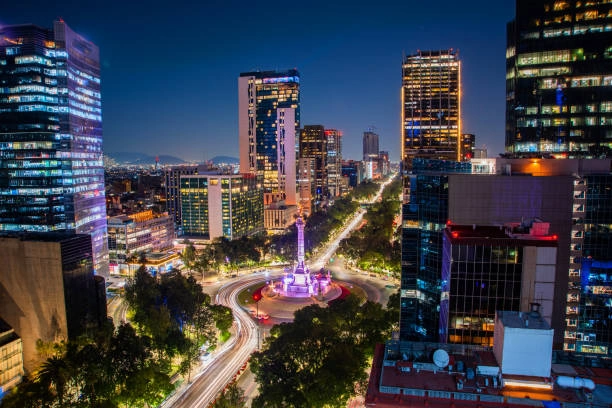
The supply of Mexico City World Cup hotels is wide and varied. The choice of area depends on whether you prioritize closeness to the Estadio Azteca, the Fan Festival, or the neighborhood atmosphere. Booking ahead is key: during the World Cup prices rise and availability drops in the most popular areas.
Centro area
The Historic Center is ideal if you want to be steps from the Mexico City Fan Festival in the Zócalo. There are hotels of every price range, from budget hostels to boutique hotels. The area has excellent Metro connections and is full of cantinas, museums and colonial architecture. The downside is that it can be noisy, especially on match nights.
Roma-Condesa
The Roma and Condesa neighborhoods form the most recommended area for international visitors. Signature restaurants, cafés, nightlife, tree-lined parks and a cosmopolitan vibe. The Metro connection is good (Insurgentes, Sevilla, Chapultepec stations). Demand during the World Cup will be very high, so booking months ahead is essential.
Near the Azteca
The Tlalpan, Coapa and Coyoacán areas are closer to the Estadio Azteca. Coyoacán stands out for its cultural atmosphere (Frida Kahlo Museum, food market, mezcal bars) and for being relatively close to the stadium. Tlalpan and Coapa are cheaper options, with less tourist appeal but very practical if your priority is minimizing travel time to the Azteca.
| Area | Profile | Advantage | Consideration |
|---|---|---|---|
| Historic Center | Fan Festival | Steps from the Zócalo and the Fan Festival | Can be noisy on match nights |
| Roma / Condesa | Recommended | Restaurants, cafés, nightlife, good connection | High demand, book ahead |
| Coyoacán | Cultural | Quieter, museums, relatively close to the Azteca | Less nightlife |
| Polanco | Premium | Luxury hotels, shopping, high-end restaurants | High prices, far from the Azteca |
| Tlalpan / Coapa | Budget | Near the Estadio Azteca, cheaper options | Less tourist appeal |
Mexico City Fan Festival and where to watch the matches
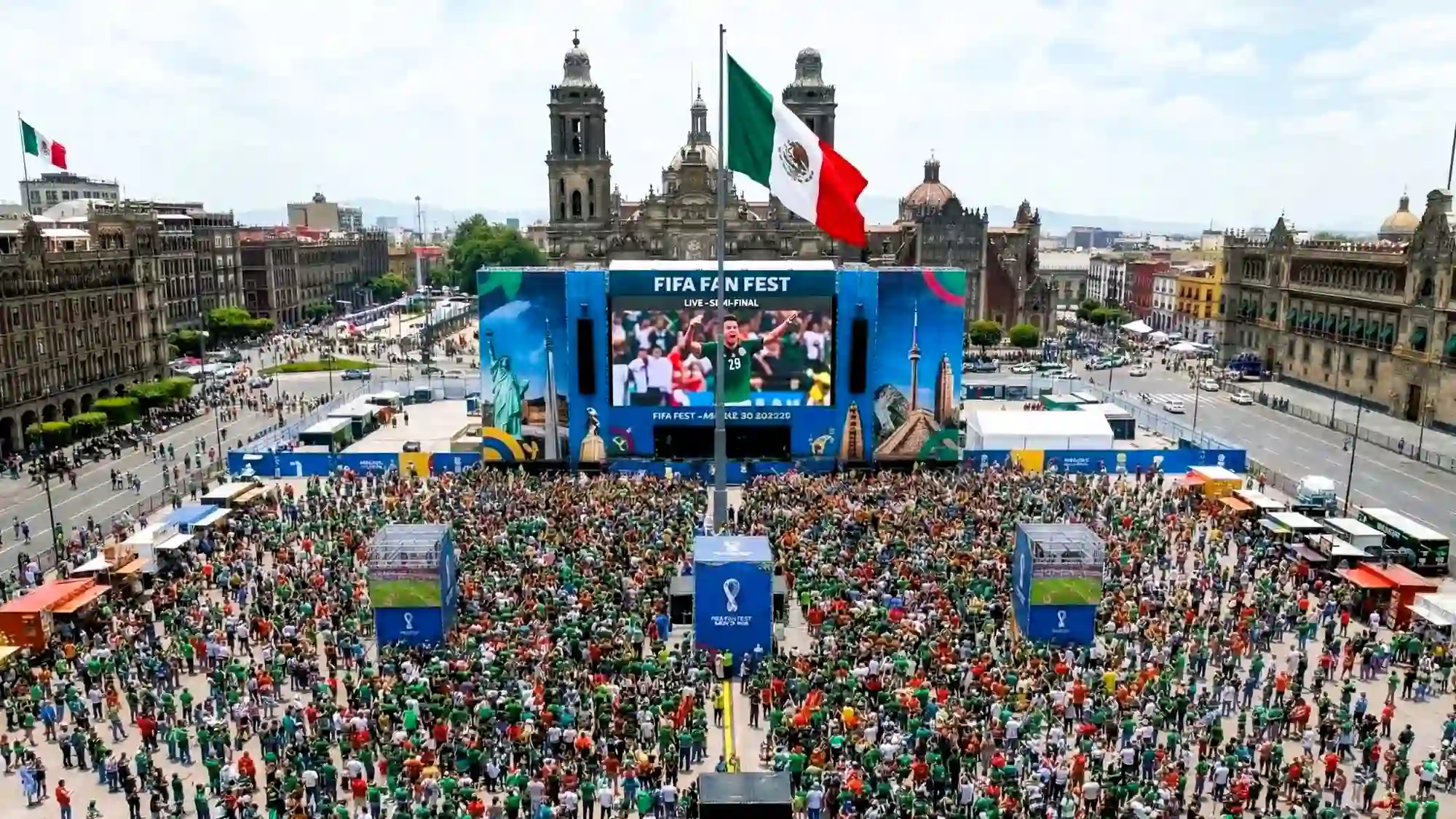
The FIFA Fan Festival Mexico City is set up in the Zócalo and surrounding streets of the Historic Center. It is free, broadcasts all the World Cup matches on giant screens and features activities, concerts and food zones during the 34 days of the tournament. It is the natural meeting point for fans without a stadium ticket.
Beyond the Fan Festival, Mexico City has a huge culture of watching football in bars, cantinas and restaurants. Neighborhoods like Roma Norte, Condesa, the Historic Center and Coyoacán will be full of places to follow the matches with atmosphere. For more options, check our guide to where to watch the 2026 World Cup free.
Safety and practical tips
Mexico City is a metropolis of more than 21 million inhabitants. As in any big city, safety depends in part on the precautions you take. These are the most important tips to enjoy the World Cup without setbacks:
- Transport: use the Metro, Metrobús or rideshare (Uber, DiDi) instead of street taxis. If you take a taxi, request one from a stand or via app.
- Cash and cards: many places accept cards, but street food stands, the Metro and markets run on cash. Carry Mexican pesos in small denominations.
- Hydration and altitude: Mexico City sits at 2,240 meters above sea level. If you come from a low city, the first days you may feel fatigue or shortness of breath. Drink plenty of water and avoid excess alcohol on the first day.
- Weather: June and July are the rainy season. Afternoons usually have intense but short downpours. Bring a raincoat or folding umbrella. Mornings are sunny, so sunscreen is essential.
- Documents: always carry a copy of your passport (physical or digital). Leave the original in the hotel safe.
- Safe areas: Roma, Condesa, Polanco, Coyoacán, the Historic Center (tourist zone) and Chapultepec are the safest and most recommended areas for tourists.
48-hour itinerary in Mexico City
If you come to Mexico City for a World Cup match and have two days to explore the city, this itinerary lets you see the essentials.
Day 1: Historic Center and Chapultepec
- Morning: Zócalo and National Palace (free entry, Diego Rivera murals). Walk along Madero Street to the Palacio de Bellas Artes.
- Midday: tacos al pastor at El Huequito or Los Cocuyos (Historic Center). Visit the Torre Latinoamericana for a panoramic view of the city.
- Afternoon: Chapultepec Forest, the largest urban park in Latin America. Visit Chapultepec Castle (a museum with spectacular views) or the National Museum of Anthropology (one of the best in the world).
- Night: dinner in Roma Norte or Condesa. Try contemporary Mexican cuisine and finish with mezcal at one of the area's bars.
Day 2: Coyoacán, Xochimilco and a match
- Morning: Coyoacán. Visit the Frida Kahlo Museum (Casa Azul, book ahead), the Coyoacán market and the Jardín Centenario.
- Midday: Xochimilco. A trajinera boat ride through the canals, with food and music on the water. A unique experience that exists nowhere else in the world.
- Afternoon: if you have a match at the Azteca, return to the hotel to rest and get ready. Head to the stadium at least 2 hours early to avoid the crowds.
- Night: if you don't have a match, go to the Fan Festival in the Zócalo to watch the game on a giant screen with thousands of fans.
Food and neighborhoods to live the World Cup
Mexico City is one of the world's food capitals. For World Cup travelers, these neighborhoods offer food, atmosphere and a connection to local culture:
| Neighborhood | Vibe | Why go |
|---|---|---|
| Historic Center | Touristy | Fan Festival, cantinas, tacos al pastor, Palacio de Bellas Artes |
| Roma Norte | Cosmopolitan | Signature restaurants, cocktail bars, bookstores, art deco architecture |
| Condesa | Hipster | Cafés, parks, brunch, accessible nightlife |
| Coyoacán | Bohemian | Coyoacán market, Frida Kahlo Museum, mezcal bars, churros |
| Xochimilco | Tradition | Trajineras, traditional food, a unique experience for visitors |
How to understand the 2026 World Cup format
This World Cup has an expanded format with 48 teams divided into 12 groups of 4. The top two of each group and the 8 best third-placed teams advance to the Round of 32. Then come the Round of 16, quarterfinals, semifinals and the final. Mexico City participates up to the Round of 16, but if Mexico advances, its later knockout matches could be at other U.S. host cities. Follow the Mexico path through the bracket and the group standings to stay up to date.
Related articles
- 2026 World Cup opening match: Mexico vs. South Africa
- Mexico's path at the 2026 World Cup
- Colombia's path at the 2026 World Cup
- Where to watch the 2026 World Cup free
- How the 2026 World Cup format works
- Mexico national team · Colombia national team
- Full schedule · Knockout bracket · Standings
- The 16 stadiums of the 2026 World Cup · Venue map
Sources: FIFA.com for schedule and opening ceremony; Metro CDMX for routes and fares; AICM and AIFA for airport information; Estadio Azteca for venue data.
Frequently asked questions
How many 2026 World Cup matches are played in Mexico City?
Mexico City hosts 5 matches at the Estadio Azteca: 3 group-stage games (including the opening match Mexico vs. South Africa on June 11), 1 Round of 32 and 1 Round of 16. The last match at the Azteca is on July 5.
How do I get to the Estadio Azteca by Metro?
The closest station is Estadio Azteca on Line 12 (gold) of the Mexico City Metro. You can also reach the Huipulco station on the Light Rail, which connects to Line 2 at Tasqueña. The Metro fare is $5 MXN per trip.
Did Mexico open the 2026 World Cup?
Yes. Mexico opened the FIFA World Cup 2026 on June 11, 2026 with the Mexico vs. South Africa match at the Estadio Azteca. It is the third time Mexico opens a World Cup, after 1970 and 1986.
Where is the Mexico City FIFA Fan Festival?
The FIFA Fan Festival Mexico City is located in the Zócalo and surrounding streets of the Historic Center. It is free and broadcasts every match on giant screens during the 34 days of the tournament.
Which teams play in Mexico City at the 2026 World Cup?
At the Estadio Azteca, Mexico (two matches: vs. South Africa and vs. Czechia), South Africa, Colombia, Uzbekistan and Czechia play in the group stage. There is also a Round of 32 match (1A vs. 3CEFHI) and a Round of 16 game with opponents to be decided.
How much does the Mexico City Metro cost to reach the Azteca?
The Mexico City Metro ticket costs $5 MXN (under $0.30 USD) per trip, regardless of distance. Line 12 has the Estadio Azteca station, a few minutes walk from the venue. It is the cheapest and most direct way to get there.
What to see in Mexico City during the World Cup?
Mexico City offers the free Fan Festival in the Zócalo, the National Museum of Anthropology, Chapultepec Castle, the Roma, Condesa and Coyoacán neighborhoods (with the Frida Kahlo Museum), the Xochimilco canal boats and world-class cuisine with tacos al pastor, tlacoyos and mezcal.
Article by
Luis MoralesJournalist and founder of the blog
Luis Morales is a professional journalist who graduated from Universidad del Externado de Colombia and the founder of this World Cup 2026 blog. He has worked for over three years as a copywriter specialized in football and major sporting events. Every article combines journalistic rigor with verification against official FIFA sources to deliver clear, accurate and useful information for fans.
Journalist and content writer · Universidad del Externado de Colombia · 3+ years
See all articles by Luis Morales →Explore more of the 2026 World Cup